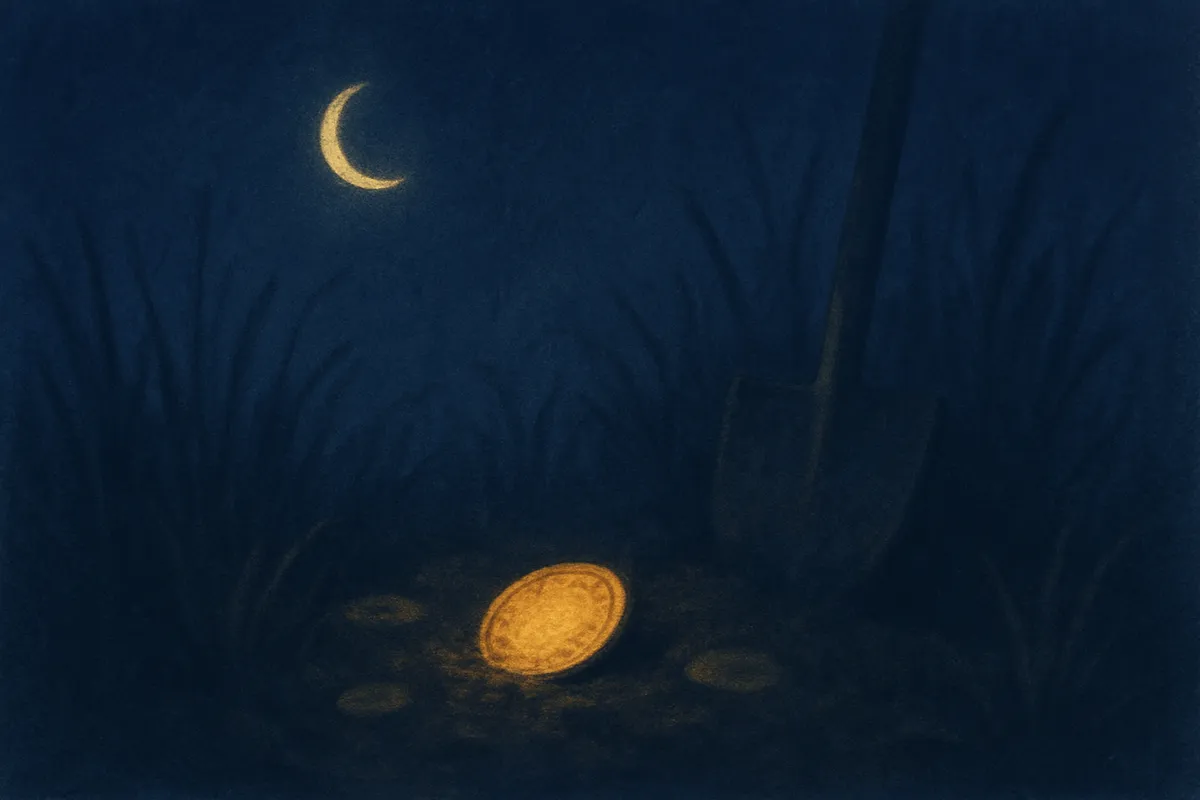
Gold is one of the most-dreamed and most-searched symbols in the world — and it's also the best proof that dream traditions are real, distinct bodies of thought rather than one vague mysticism. Because on gold, they openly disagree.
What the traditions say
The Western folk books glitter: finding gold is fortune, recognition, a season of plenty. But even they hedge — gold too easily taken, or too much of it, read as temptation and false promise; counting or hoarding it warned of a miserly heart, while giving it away read as honor. Artemidorus, typically, made it depend on the dreamer: a rich man's gold-dream was not a poor man's.
The tabir tradition attributed to Ibn Sirin famously breaks the other way: gold for men was often read as dislikeable — grief, a fine, a burden to carry — rooted in the tradition's own rulings on gold ornament, while gold for women read as adornment and joy. Coins could mean disputes; a gift of gold, standing gained.
The sennik canon splits the difference with Slavic pragmatism: found gold, unexpected fortune; counted gold, greed creeping in; lost gold, guard what you value; and — the loveliest entry — buried gold as a talent the dreamer is hiding.
When traditions this old disagree this directly, the honest conclusion isn't that one is right. It's that gold has always been a mirror: each tradition read its own relationship to wealth into the dream.
What psychologists notice
The psychological reading sits underneath all three: dream-gold is the question "what do I hold precious right now — and is it safe?" Finding gold often coincides with recognizing your own capability, or an opportunity newly visible. Losing or hiding it, with fear that something valued is exposed. Jung went further with the old alchemical image: gold as the self being refined — the valuable thing not found but made, slowly, under pressure.
A question to sit with
If the gold in your dream stood for one thing you currently treasure — which thing was it? Answer fast; the first answer is usually the dream's.
If you found the gold
Notice where. Found in the open: the folk reading of fortune fits. Dug up or discovered hidden: the sennik's buried-talent reading — something of yours ready to surface. Found and immediately feared taken: the dream has moved on to the question of protection.
If you were counting or hoarding it
Every tradition raises an eyebrow here. The dream books read counting as greed at the door; the psychological reading is gentler — a season of anxious accounting, tallying whether what you have is enough.
If the gold was a gift — or a burden
A gift of gold read as standing gained in tabir, friendship proven in the sennik. Gold that grew heavy, though, is the tabir reading come alive: something precious that has started to cost you. If that image stayed with you after waking, it's the one to think about.
The general meanings end here — and this symbol more than any shows their limit, because the traditions themselves couldn't agree. What your gold means depends on where it appeared, what you did with it, and what was happening in your life that week. That's the reading only your own dreams can give — the one Dreamlock writes for you every morning.