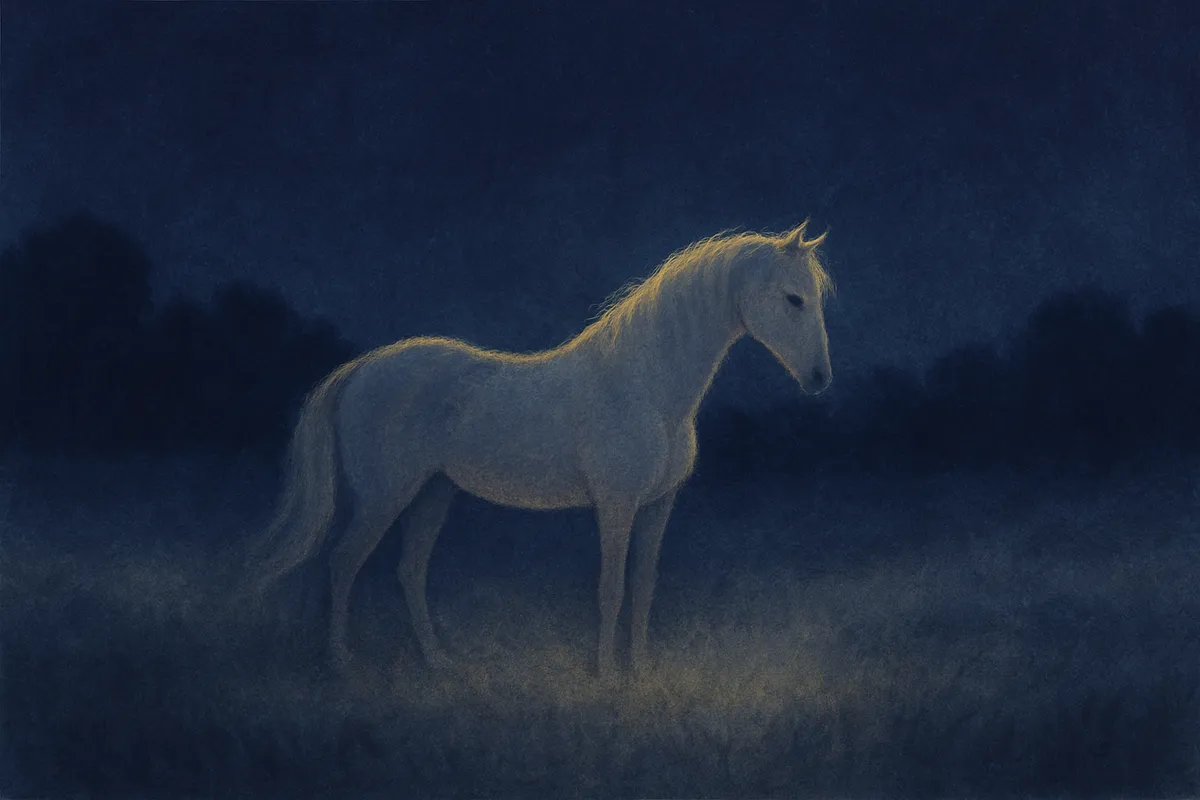
Almost every dream tradition that survives has a horse in it, and they all reach for the same word: power. Not power in the abstract — power with a temperament, power you sit on top of. Which is why the horse dream keeps asking one question, in every century and every language: are you riding, or being carried?
What the traditions say
The tabir tradition is the most exacting about it. There the horse is among the canon's clearest status symbols: riding a fine, obedient horse read as standing and authority in one's affairs; an unruly or bolting horse, rank endangered by one's own passions; dismounting unwillingly, a loss of position; a horse given to the dreamer, standing granted. The horse doesn't just carry you in that reading — it is your place in the world, and its temper is how secure that place feels.
The Western folk books read the horse as fortune and standing — fortune in motion. Riding a willing horse meant advancement and affairs moving well; an unruly one, matters barely in hand; a horse at pasture, prosperity resting; a fall, a setback in standing. The old books read the horse's color and temper as the shading of the news, the way they read money as standing more often than cash.
The Polish sennik canon is the sunniest of the three: good news and work rewarded. A horse meant affairs moving; riding meant advancement; a horse pulling a loaded cart, effort paying steadily; a runaway horse, matters taking their own head; and a white horse — the sennik's brightest shading of the entire entry.
Three traditions, one skeleton: the horse is your forward motion, and the state of the reins is the state of your grip on it.
What psychologists notice
The psychological reading keeps the skeleton and drops the fortune-telling: the horse as drive and vitality — the body's power and how it's being ridden. Freud and Jung both leaned on the horse as instinct under (or out from under) the rider's hand. Riding well tends to track with a season of momentum; an unrideable or bolting horse, drive outpacing control; a starved or lame horse, energy neglected — ambition fed nothing for too long.
What changes between the old books and the modern ear is only the address. The traditions pointed the horse outward, at rank and affairs; psychologists point it inward, at your own engine. The reins question survives the move intact.
A question to sit with
Where in your life right now is there real momentum — and whose hands are on the reins of it: yours, or somebody else's?
If you rode with ease
The strong reading everywhere. The tabir tradition saw authority in one's affairs; the folk books, advancement; psychologists, energy and direction in rare agreement. Dreamers often describe the same lifted, effortless feeling that flying dreams bring — competence enjoying itself. Worth noting what you were riding toward, if the dream let you see it.
If the horse bolted or wouldn't be ridden
This is the variant that wakes people. The tabir tradition's reading is the sharpest — rank endangered by one's own passions, the danger coming from inside the rider — and the modern reading rhymes with it: drive outpacing control. A runaway horse is not an enemy, which is what separates this dream from being chased; it's your own power, moving without you. Ask what in your waking life has recently taken its own head.
If it was at pasture
The quietest entry, and a kind one. The folk books read a horse at pasture as prosperity resting — power present, fed, and not currently needed. Psychologists would only add the follow-up: resting, or neglected? A grazing horse and a starved one are different dreams. If yours looked well, the dream may simply be keeping inventory.
If you fell from the horse
The old books read a fall from a horse as a setback in standing, and the tabir tradition read an unwilling dismount as a loss of position. The gentler modern reading is a loss of momentum — or the fear of one arriving before the fact, the way falling dreams so often do. As with those, what you do after you land is the part of the dream worth keeping: dreamers who get up, or catch the horse, tend to remember the dream very differently. None of this foretells anything — dreams reflect the dreamer, not the future — but a fall dreamt in a season of high stakes is usually worth a moment's honest attention.
A dictionary can tell you what horses mean in general. It can't see that yours was your grandfather's, or that it bolts only in the weeks before a deadline. That's the part only your own dreams, remembered together, can answer — and it's exactly what Dreamlock is built to do.