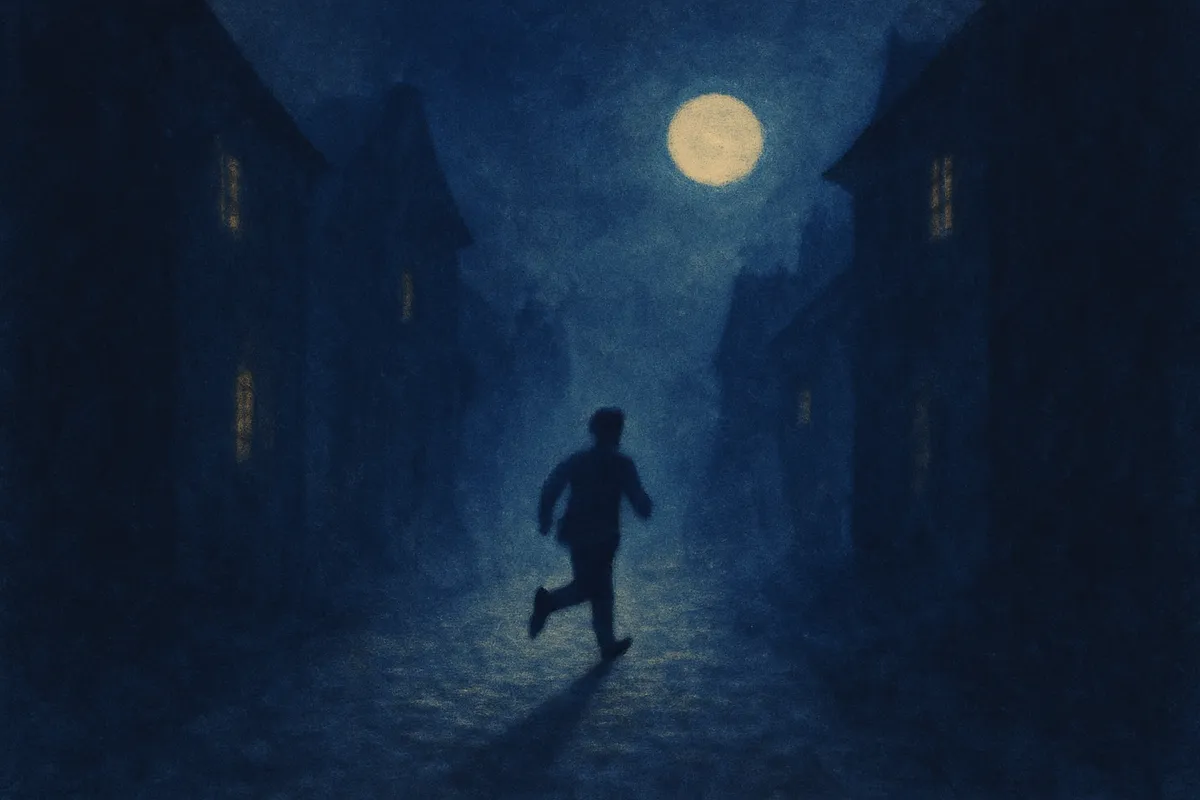
You wake with your heart still going, the door of the dream barely closed behind you. Being chased is one of the handful of dreams reported everywhere — in every century, in every language the dream books were written in — and it almost never feels symbolic while it's happening. It feels like escape. The old interpreters were unanimous that it is really about the opposite: the thing you haven't turned around to face.
What the traditions say
Artemidorus, in the 2nd century, tied pursuit dreams to the dreamer's real adversaries and unsettled affairs — for him the chase was never abstract. The European folk books that followed him kept that concreteness and read an enemy or a debt at your heels, and they asked one sharpening question: who chases? A beast, an unpaid obligation, a wronged person — each pulled the reading in its own direction. Escape they read as danger dodged; capture as a matter that must finally be faced.
The Islamic tabir tradition attributed to Ibn Sirin reads pursuit the same way — an adversary or an obligation pressing — and attends closely to the pursuer: an animal graded the enemy's nature, while fleeing from a person of authority was read as fleeing a duty. Escape signified safety granted; being seized, a matter that will reach the dreamer regardless. The Polish sennik canon compresses the whole entry into one famously pointed line: "Pursued — your conscience knows by whom."
Traditions that disagree about gold and quarrel over teeth agree almost word for word here, and that rare unanimity is worth noticing: wherever dreams have been written down, the chase has been read as something owed, avoided, or unfinished — not something foreign. None of it is prophecy, of course; escape and capture in these old readings describe the dreamer's situation, not the future — our position on prediction is a plain no.
What psychologists notice
Psychologists call this the textbook avoidance dream. What chases matters less than the chasing itself: something unresolved is demanding attention, and the dream rehearses, at night, the flight the dreamer performs by day — the unread message, the postponed conversation, the decision left circling. One detail psychologists find worth passing on: the pursuer often softens or transforms in later dreams once the waking issue is finally faced. The dream isn't hunting you. It's keeping the appointment you keep cancelling.
A question to sit with
If you stopped running — in the dream, or tomorrow morning — what would catch up with you first?
If you couldn't run
Legs like lead, the ground turned to syrup, the pursuer gaining while you strain in place — this is the variant people describe with the most feeling. During dreaming sleep the body rests almost motionless, and one plain explanation is that the dream borrows that stillness at the worst possible moment. But psychologists hear something more in the frustration itself: the leaden legs stage exactly how the avoided thing feels in waking life — too heavy to outrun, too close to ignore. The dream isn't mocking your effort; it's measuring it.
If you never saw who was chasing you
The faceless pursuer is the most common version of all, and the sennik's line — your conscience knows by whom — is the traditional answer to it. The modern reading rhymes: the dream withholds the name because naming it is precisely what's being avoided. If the figure stays unknown night after night, the useful move isn't dread but attention — details surface in the first minute after waking and dissolve fast, which is why catching the dream early matters more for this variant than for almost any other.
If it was an animal
Here the old books get specific: the tabir interpreters read the pursuing animal as showing the adversary's nature, and the European folk books listed the beast alongside the debt and the wronged person as the three classic pursuers. So note which animal it was — a dog carries different weather than a bull, and a snake has an entire tradition of its own. The animal usually characterizes the pressure you're under, not a literal creature; ask what in your week behaves the way it did.
A dictionary can tell you what being chased means in general. It can't see that your pursuer only appears on Sunday nights, or that you stopped being able to run the month your workload doubled. Patterns like that live across many dreams, not in one — and noticing them is exactly what Dreamlock is built for.