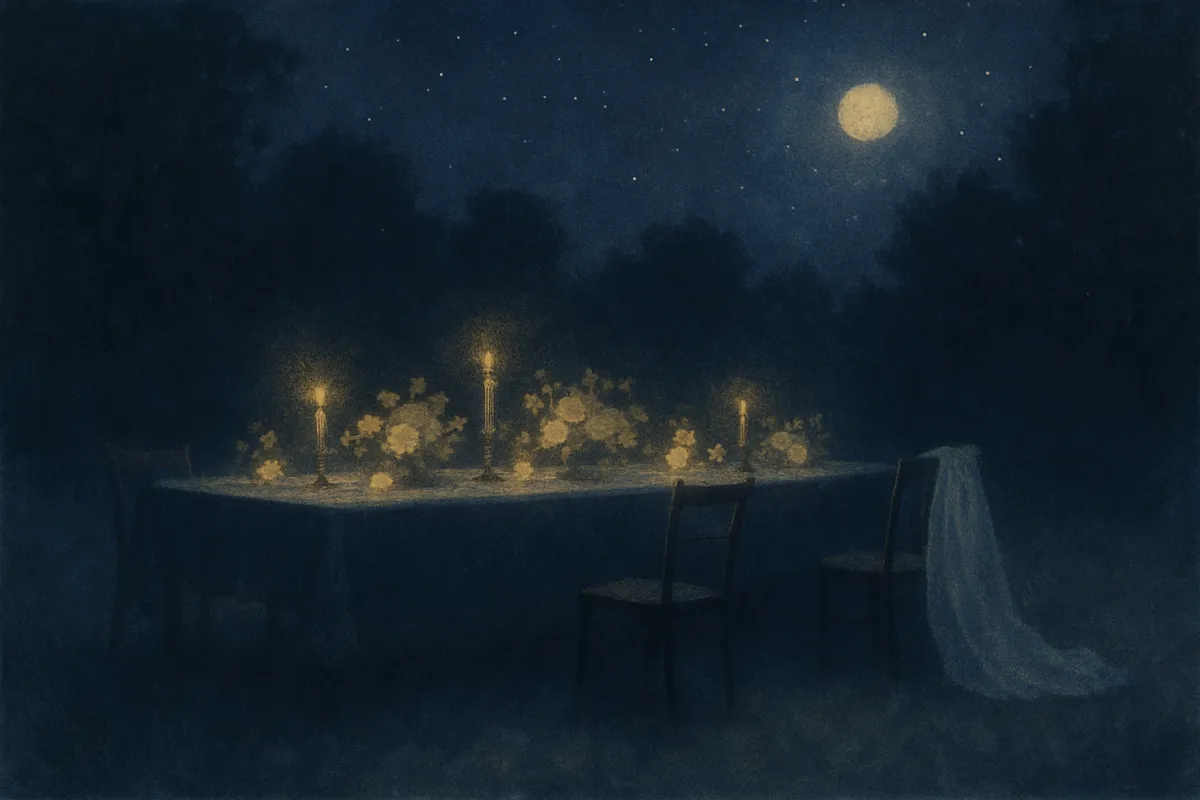
A wedding should be the easiest dream in the book: white dress, good omen, done. Except the people who actually wrote the dream books refused to read it that way. Across traditions that agree on almost nothing else, the wedding dream comes with a raised eyebrow — and that surprise is worth understanding before you take yours at face value.
What the traditions say
The European folk books are deceptively mixed on weddings. Dreaming of your own wedding could warn as often as it promised, and in parts of European and Slavic folk belief the wedding dream flatly inverted — celebration standing in for solemn news, and solemn scenes for celebration. The Polish sennik canon carries that caution famously: one's own wedding read as grave tidings as readily as joy, with only a cheerful, sunlit wedding softening the whole entry. Watching a stranger's wedding read lighter everywhere — change in the wider circle, not a matter laid at your door.
The tabir tradition attributed to Ibn Sirin goes a different and revealing way: marriage is contract and responsibility. To marry in a dream was to take on a charge, a standing, a trust — and the reading graded by the details: a known or unknown spouse, the state of the celebration. An elaborate wedding full of unfamiliar faces was read cautiously; a modest, luminous one, favorably. It is the same clear-eyed instinct that makes the tradition read gold against the Western grain — the tabir looks past the shine to the weight of the thing.
So the traditions disagree on the omen but agree on the substance: a dream wedding is not a party. It is a binding — and every canon asks, in its own voice, whether the dreamer is ready to be bound.
What psychologists notice
Psychologists read wedding dreams as commitment weighed. Outside literal engagement seasons, they tend to appear when a binding choice is near — a job, a move, a promise — and the dream's mood is usually the telling part: joy, dread, or farce as the dreamer's unspoken verdict on the commitment itself. A wedding dream that feels wrong is rarely about the venue.
Jung read marriage imagery another way entirely: as inner union — two parts of the self agreeing, a divided person coming to terms. Both readings end at the same door: something in your waking life is asking for your signature, and the dream is how you're rehearsing your answer.
A question to sit with
What are you close to committing to right now — and if the dream's mood was the verdict, what did you just tell yourself about it?
If it was your own wedding
This is the variant the traditions watch most closely. The folk books read one's own wedding as warning as often as promise; the tabir tradition read it as a charge or trust taken on, graded by whether the spouse was known and the celebration modest or overblown. The psychological reading is simpler and often more useful: you are the one at the altar because you are the one deciding. Note who was there, who wasn't, and how you felt walking in — that feeling is usually the dream's whole argument.
If you watched a stranger's wedding
The gentlest variant in every canon. The old books read a stranger's wedding as change in the wider circle; the sennik says change among acquaintances — movement near you, not a matter of yours. The modern ear adds one question: if you felt something sharp while watching — longing, relief, exclusion — the dream may have been less about the strangers than about where you were standing.
If the wedding went wrong
A collapsing wedding — the dress ruined, the guests wrong, the ceremony stalling — reads less darkly than it feels. The sennik takes even wedding music as mixed tidings and lets a bright, cheerful wedding soften everything, which cuts the other way too: disorder in the scene, unease about the bond. The tabir tradition was already cautious about lavish weddings among unfamiliar faces. Psychologists are plainest of all: the farce or dread is the verdict — some part of you objects, and the dream is where the objection got to speak. If you want to know what it was objecting to, our position on whether dreams predict anything is a useful place to start: they don't foretell, they reflect.
A dictionary can tell you what weddings mean in general. It can't see that yours was held in your childhood garden, or that it arrives every time a contract lands on your desk. That pattern lives only in your own dreams, remembered together — which is exactly what Dreamlock is built to do, coming soon to the App Store.