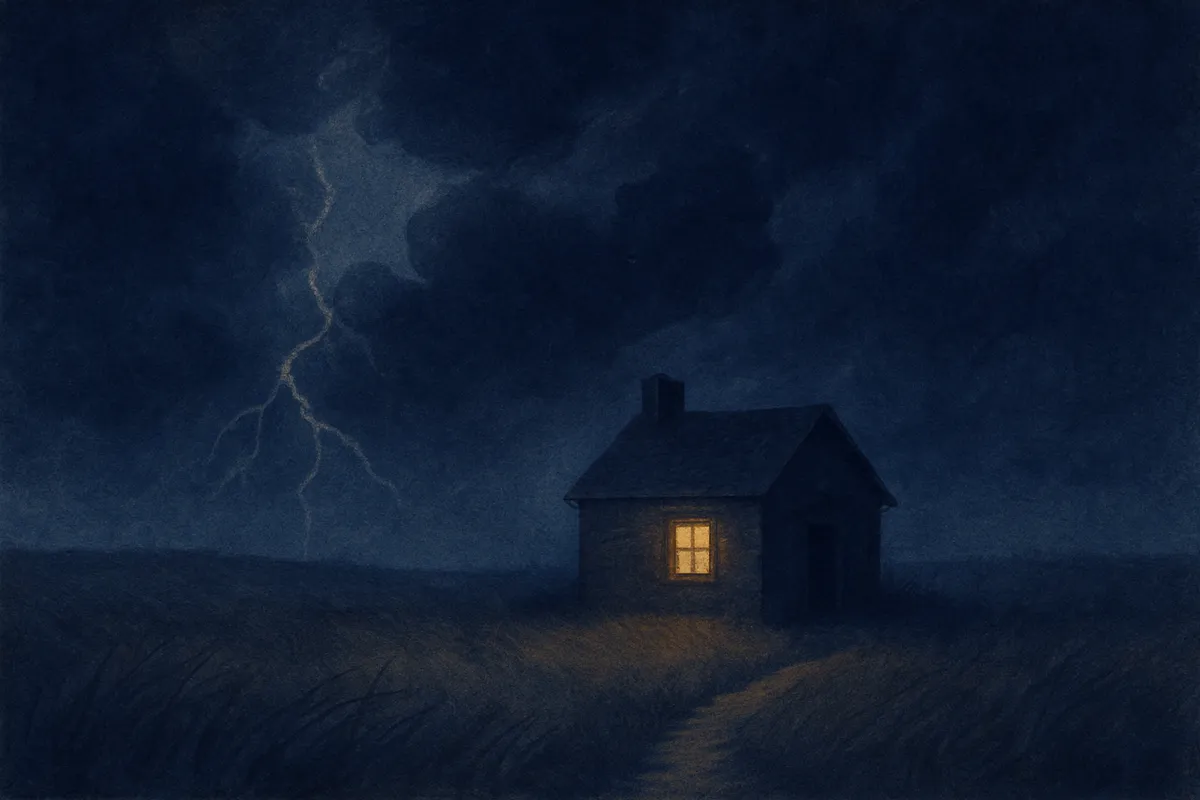
A storm is the one dream where the threat has no face. Nothing chases you, nothing bites; the whole sky simply turns against the day, and you are suddenly small under it. Dreamers remember the sound more than anything: wind, thunder, the first hard rain. Miller, the Golden Wheel Dream-Book and Artemidorus listened closely, and read thunder, lightning and rain each on its own terms.
| Variant | What the old books read | Source |
|---|---|---|
| Thunder | Reverses in business; or large crops and big business | Miller 1901; Golden Wheel 1862 |
| Lightning | Happiness "of short duration"; a pleasant trip | Miller 1901; Golden Wheel 1862 |
| Being struck by lightning | Unexpected sorrows; good for the poor, bad for the rich | Miller 1901; Artemidorus |
| Heavy rain in a storm | Good luck spoiled by misfortunes | Golden Wheel 1862 |
| A storm at sea | Confusion and losses | Artemidorus; Miller 1901 |
What does it mean to dream about a storm?
The general verdict was dark. Miller's 1901 dream dictionary (Ten Thousand Dreams Interpreted) read tempests as "a siege of calamitous trouble", with friends turning indifferent. The Golden Wheel Dream-Book (1862) read long, great tempests as affliction, dangers and losses.
Yet both older books kept an exception, and it is the same one. The Golden Wheel ended its tempest line "to the poor, repose." Artemidorus, whose Oneirocritica (2nd century) we cite in Friedrich Krauss's 1881 German translation, read a downpour, a whirlwind or a storm as dangers and losses, except for slaves, the poor and people in difficulty, for whom the same storm meant release from what pressed on them. The dreamer's situation decided the weather.
The details divide them further. Thunder, lightning and rain each had their own readings, and on thunder the Golden Wheel and Miller flatly disagree.
What the storm did
These are readings from the old dream books, reported as history — no dream foretells the future.
What does it mean to dream of a storm coming?
The storm still on the horizon, dark and advancing, is a dream of waiting. Miller's "Storm" entry opens on exactly this scene, seeing and hearing a storm approach, and read it as continued sickness, poor business and separation from friends; if it passed over without breaking, he added, the affliction would be lighter. That is a 1901 verdict, not a health forecast. Psychologists hear anticipation: tension you can see building and are bracing for.
Was your dream different? Dreamlock reads the one you actually had →
What does it mean to dream of thunder?
Thunder is the storm's voice, often heard before anything is seen. Miller read hearing thunder as reverses threatening the dreamer's business. The Golden Wheel Dream-Book (1862) read heavy thunder the opposite way, as large crops for farmers and big business for tradesmen, and being terrified by it as so much the better. Artemidorus read thunder without lightning as surprises and plots. Psychologists hear warning noise: trouble audible before it arrives.
Was your dream different? Dreamlock reads the one you actually had →
What does it mean to dream of lightning?
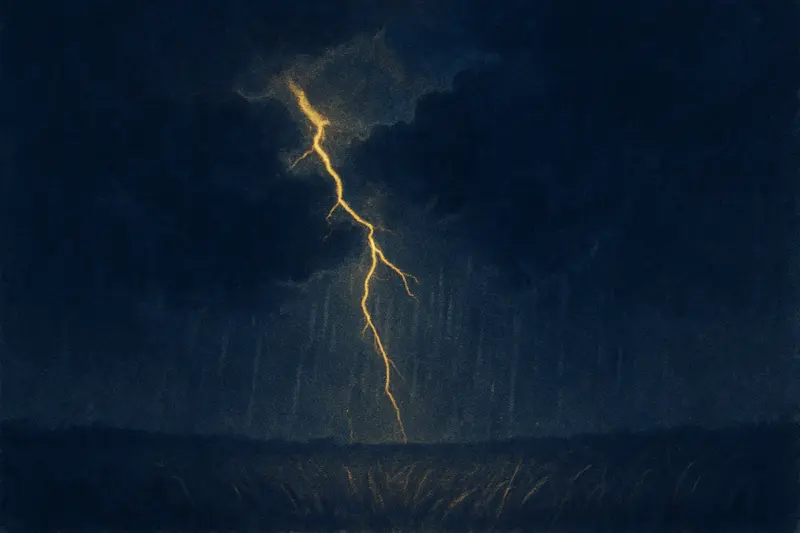
Lightning lights everything for an instant, then leaves it darker. Miller read it as "happiness and prosperity of short duration", and lightning from dark, ominous clouds as a forerunner of loss. The Golden Wheel Dream-Book (1862) read it by colour: bright white lightning as a pleasant trip, bluish-silver forked lightning as good crops and success. Artemidorus read lightning without thunder as groundless fear. The modern reading is a sudden clarity, or a shock.
What does it mean to dream of being struck by lightning?
Being struck is the storm singling you out. Miller read it as unexpected sorrows overwhelming the dreamer in business or love. Artemidorus reported the oldest interpreters' double reading for lightning striking the head: good for the poor, bad for the rich, since fire consumes whatever it finds, the poor man's poverty and the rich man's wealth. Psychologists hear a sudden change that has picked you out: news, a decision, a revelation.
What does it mean to dream of heavy rain in a storm?
Rain is the storm's most ordinary part, and the Golden Wheel and Artemidorus read it most kindly. The Golden Wheel Dream-Book (1862) read a violent rainstorm as good luck that misfortunes would spoil, and gentle showers as the luck without the spoiling. Artemidorus read rain without storm or strong wind as good for everyone except travellers and those who work outdoors. The modern reading is release: something long held, finally coming down.
Where you were when it broke
What does it mean to dream of finding shelter from a storm?
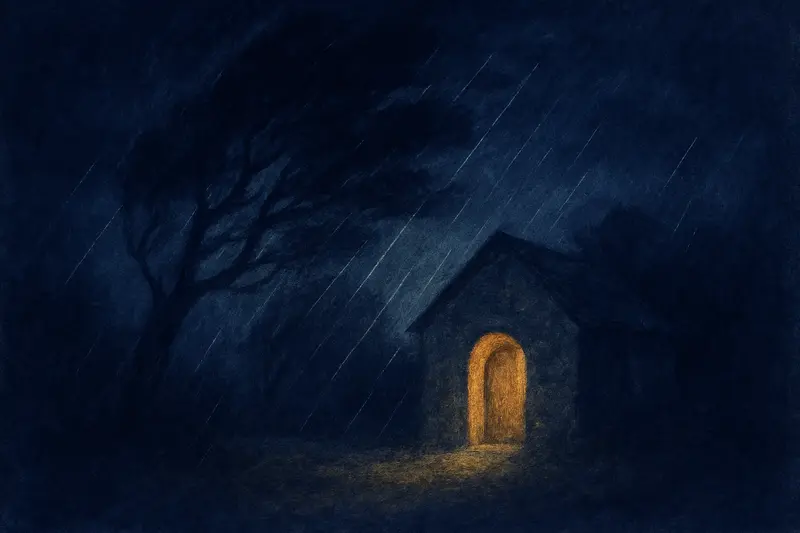
A doorway, a barn, a stranger's porch: shelter is the kindest version. None of the three books reads where the dreamer sheltered. Psychologists notice that where you were when the storm broke, exposed or covered, tracks closely with how resourced you feel in the waking situation. The shelter often has a waking name: a person, a habit, a place that holds when the weather turns.
Was your dream different? Dreamlock reads the one you actually had →
What does it mean to dream of a storm at sea?
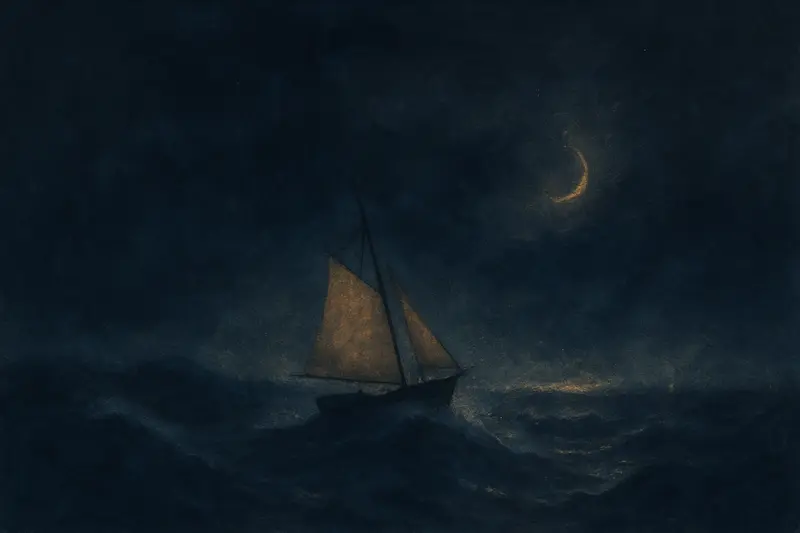
A storm at sea takes away the ground entirely. Artemidorus read a storm on the sea as confusion and losses, because the storm causes both. A sea in gentle motion he read as success in business. Miller, under "Ship", read a ship labouring through a tempest as misfortune in business and an intrigue hard to hide. Psychologists hear a venture or relationship in rough water, and a question of who is steering. More in dreams about the sea.
What does a storm dream mean psychologically?
Psychologists read the dream storm as a charged atmosphere finally breaking. These dreams tend to arrive when tension has been building (a conflict avoided too long, a pressure absorbed daily and never named) or in seasons when forces outside the dreamer's control are setting the weather: other people's decisions, other people's moods.
The calm that follows a dream storm is often as telling as the storm itself: the mind rehearsing not just the conflict but its survivable far side. Where a tornado gives trouble one visible body, a storm spreads it across the whole sky.
A question to sit with
What has been building pressure in your life without ever quite breaking, and are you waiting it out under a roof, or standing in the open?
Miller's and Artemidorus's verdicts on storms can't say whose weather this was: the same storm means one thing in a week of held-back argument and another in a season of outside pressure. Set your storms side by side and the difference starts to show. Dreamlock, on the App Store for iPhone, sets them side by side: it listens to the dream you record, paints it, and remembers how often calm follows.