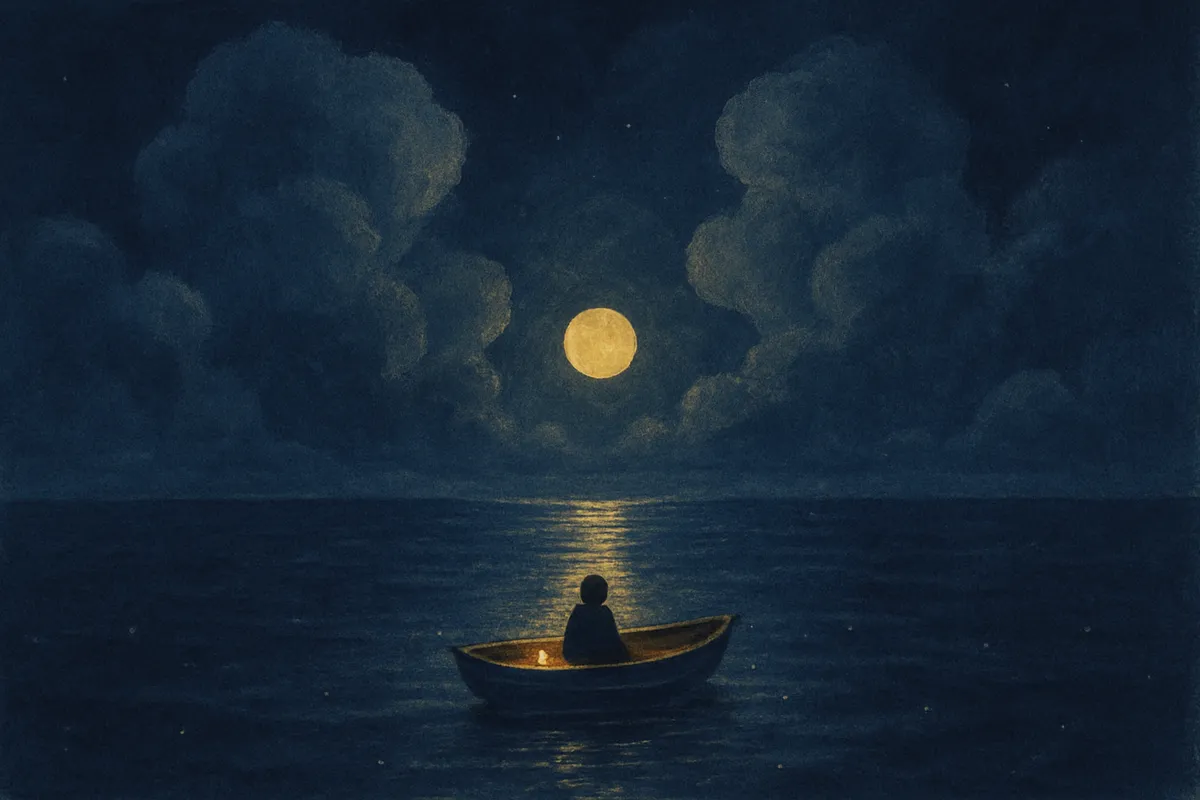
Some dreams give you a symbol; the sea gives you a horizon. Where water in a dream is read by its condition, the sea is water at a scale that makes the dreamer small. Miller, Artemidorus and the Golden Wheel Dream-Book read it mostly by its weather.
| Variant | What the old books read | Source |
|---|---|---|
| A shipwreck | A disastrous turn in affairs; or, by contrary, good luck | Miller 1901; Golden Wheel 1862 |
| At sea with your partner | "Sweet fruition" of a young woman's hopes | Miller 1901 |
| A calm sea | "Propitious"; gentle waves as success in business | Miller 1901; Artemidorus |
| A stormy sea | Disaster in business; difficulties to be overcome | Miller 1901; Golden Wheel 1862 |
| A shallow sea | Prosperity and pleasure, mixed with sorrow | Miller 1901 |
| Watching waves from shore | A narrow escape from injury | Miller 1901 |
What does it mean to dream about the sea?
Miller's 1901 dream dictionary (Ten Thousand Dreams Interpreted) begins its "Sea" entry wistfully: "Dreams of the sea, prognosticate unfulfilled anticipations", pleasures of the body with an inward craving left over. His "Ocean" entry is where the weather comes in, and there he was far kinder when the water was calm.
Artemidorus, whose Oneirocritica (2nd century) we cite in Friedrich Krauss's 1881 German translation, made the finest distinction of the three. A sea in gentle motion, waves breaking, he read as always lucky, excellent success in business. A dead calm meant no business at all, since nothing moved, and a storm meant confusion and losses. For him the best sea was neither flat nor wild.
The Golden Wheel Dream-Book (1862) was the most forgiving. Going to sea meant luck in money matters, storms were difficulties to be overcome, and, by a reading of contraries, being seasick "denotes continued health". On the shipwreck it and Miller take opposite sides. These are old hopes and fears written down, not forecasts.
What you did at sea
These are readings from the old dream books, reported as history — no dream foretells the future.
What does it mean to dream of sailing far from shore?

Canvas full, the coast a thin line, then gone. Miller counted sailing on a calm ocean always propitious, and the Golden Wheel Dream-Book read going to sea in a ship or steamer as good fortune in money matters. If no land was in sight, psychologists add a gentler note: you were somewhere in yourself that maps don't cover, and the dream thought you could handle it.
What does it mean to dream of swimming in the sea?
Salt water, the body lifted, the depth underneath. None of the three books cited here reads swimming in the sea. The modern reading follows how it felt: easy swimming often accompanies a sense of moving well through something large, while struggling against waves echoes effort without footing. If you went under, see drowning.
Was your dream different? Dreamlock reads the one you actually had →
What does it mean to dream of a shipwreck?
Timbers splitting, the deck tilting. Miller wrote that "To hear of a shipwreck is ominous of a disastrous turn in affairs", and read seeing others wrecked as trying in vain to shield a friend. The Golden Wheel read being shipwrecked by its contrary, as good luck in business with quarrels in love. Psychologists hear a plan or structure breaking apart, and the question of what floats.
What does it mean to dream of being at sea with your partner?
Two people, one boat, open water. Miller read a young woman gliding swiftly over the sea with her lover as the "sweet fruition of maidenly hopes", the one wholly happy line in his sea entry. The modern reading asks about the crossing: who steered, whether the water was calm, and how the dreamer felt about where the two of you were headed.
What the sea was like
What does it mean to dream of a calm sea?
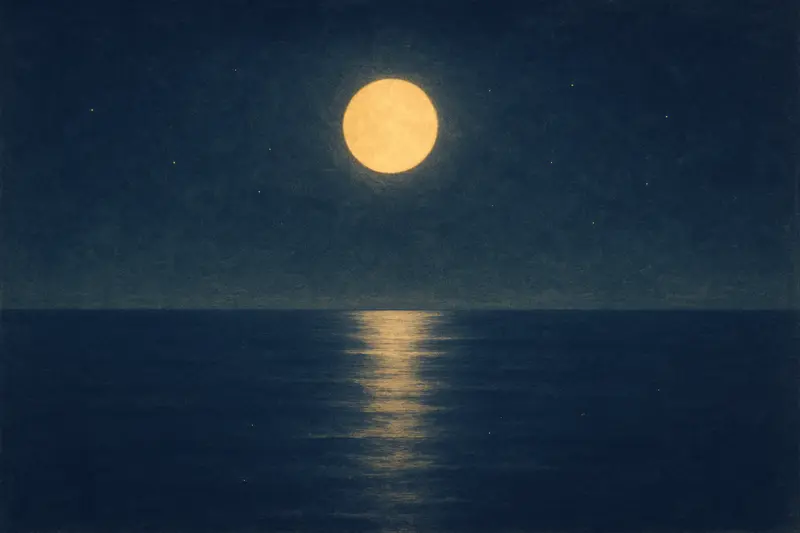
Flat water, the moon on it. Miller wrote simply: "To dream of the ocean when it is calm is propitious", for the sailor, the merchant and the young lover alike. Artemidorus disagreed in a detail: a sea in gentle motion was his lucky one, and a dead calm meant idleness. Psychologists read calm water as something enormous in your life that is, for now, lying quiet.
Was your dream different? Dreamlock reads the one you actually had →
What does it mean to dream of a rough, stormy sea?
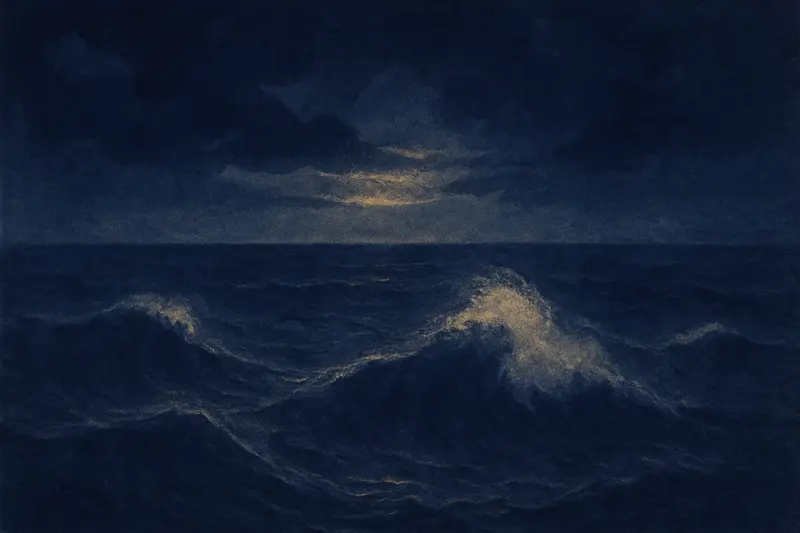
Waves over the bow, the horizon gone. Miller read hearing waves lash the ship far out as disaster in business and stormy times at home. Artemidorus read a storm at sea as confusion and losses. The Golden Wheel was milder: "storms and perils at sea foretell difficulties which may be overcome". Psychologists hear turbulent feeling, kin to the storm but wider.
Was your dream different? Dreamlock reads the one you actually had →
What does it mean to dream of a sea so shallow you can wade in it?
You can see the bottom, sand and stones. Miller gave this its own branch: an ocean shallow enough to wade in meant prosperity and pleasure, mixed with sorrow and hardship. The divided verdict fits the half-safe scene. Psychologists hear something that looked vast turning out manageable, or depth you are choosing not to enter yet.
What does it mean to dream of watching the waves from the shore?
You stand on the sand and the waves crash into each other. Miller read watching the ocean's waves foam against one another from shore as a narrow escape from injury and from enemies' designs. The danger is seen from safety, and his reading follows the scene. The modern ear hears an observer: close to something powerful, not yet in it.
What does a sea dream mean psychologically?
Psychologists notice that the sea arrives in dreams as an immensity: vast, indifferent, and carrying whatever the dreamer cannot yet see beneath its surface. It tends to visit at moments of openness, or of feeling very small before something much larger: a family crisis, a faith shifting, a decade turning over.
Jung read the sea as the collective unconscious itself, the source from which individual life emerges and to which it returns. You don't have to sail that far with him to notice what the image does. In sea dreams the interesting question is rarely the water. It's how small you were, and how that smallness felt.
A question to sit with
When did you last feel that small before something that vast, and was the feeling fear, or was some part of it relief?
Miller's sea is every sea. Yours may always be the grey one from a childhood ferry, and the water may turn rough only when a decision is overdue. You find that out by keeping your sea dreams and reading them in a row. Dreamlock, on the App Store for iPhone, does the keeping: it listens to the dreams you record, paints them, and remembers the weather.