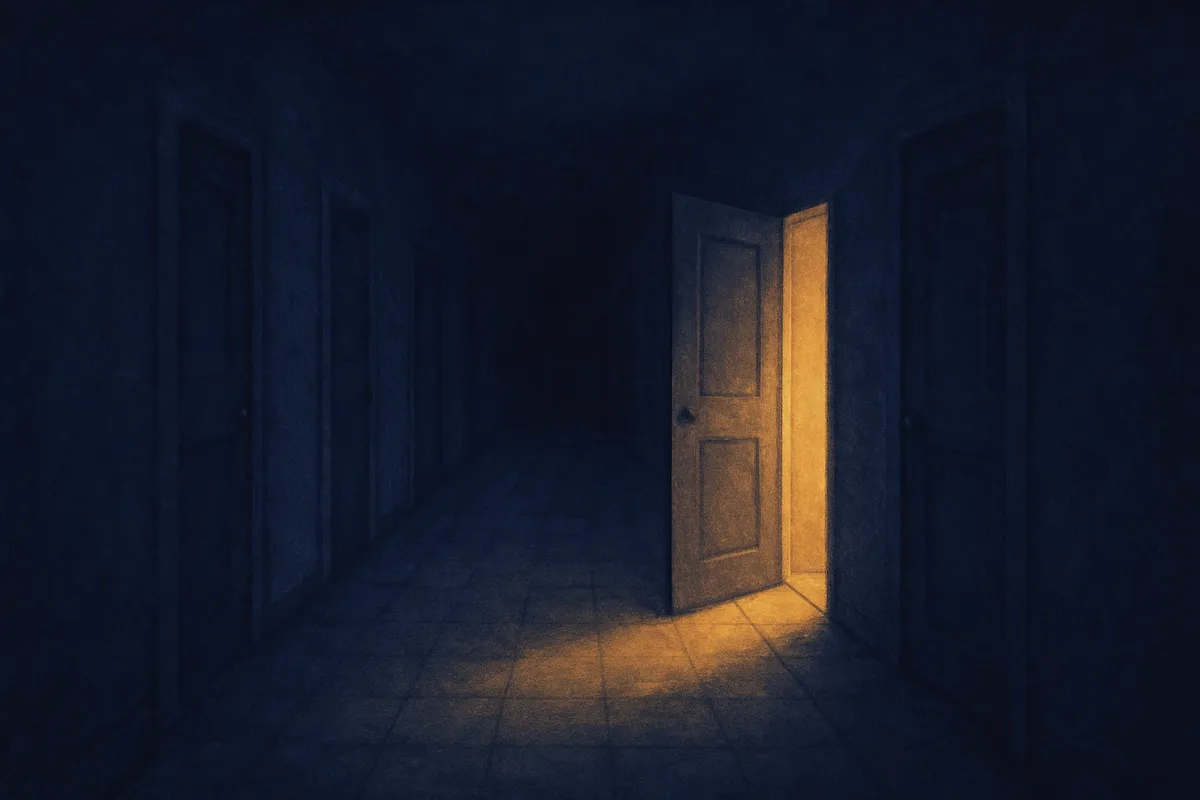
There is a dream almost every adult has had, and almost no one mentions: the search for a toilet. Every stall occupied, or missing its door, or standing implausibly in the middle of a public hall. It sits near the top of the most-common-dreams lists and near the bottom of the most-discussed, which is a shame — because it's one of the most legible dreams there is.
What the traditions say
The old European folk books handled the privy with euphemism and surprising cheer. Their most famous entry is the one that startles modern readers: filth and excrement read as money — profit from unglamorous quarters. The Polish sennik canon keeps the equation with a straight face to this day: filth, money; a privy, burdens discharged; cleaning one, order restored where it was least pleasant to make it. Odd as it sounds, the logic is old and consistent — the old readers saw value arriving from exactly the places nobody wanted to look.
The Islamic tabir tradition is briefer and more practical: relieving oneself as release from burdens — often the spending of money or the discharge of a worry — with the state of the place carrying the judgment. A clean place, affairs in order; a foul one, gains or dealings that want washing.
And the folk books already knew the modern dream too: seeking a privy and finding none, they wrote, is a need with no private place to meet it. On that point, the 19th century and the psychologists agree completely.
What psychologists notice
The searching version — occupied, doorless, impossibly public — is the one psychologists take most seriously, and they read it as a dream about privacy and boundaries. A toilet is the one room in ordinary life where you are entitled to be alone, no explanation owed. To dream that no such room exists is to feel that entitlement slipping: real needs waiting, and no safe place to meet them. The dream tends to visit during overexposed stretches of life — too many people with claims on you, too few doors that close. If the house in dreams is the self, this dream is about the one room of it you can't currently reach.
But psychologists also insist on the mundane check, and here more than anywhere: sometimes the body is simply asking the sleeper to wake up. The sleeping brain weaves real signals into its story, and a full bladder writes this exact plot. If you woke and went, congratulations — the dream is solved. No symbol survives contact with a solution that simple.
A question to sit with
Where in your waking life, right now, is there a real need waiting — and no room where you could meet it without an audience?
If you couldn't find one, or every door was wrong
The classic. Each door locked, occupied, the wrong kind, or opening onto somewhere else entirely — the search itself is the dream. Read it as an inventory question: which need has been circling for weeks without a private hour to land in? Dreamers in caretaking seasons, open-plan offices, and crowded houses know this corridor well. The dream isn't scolding you for the need; it's noting, patiently, that the need is still unmet.
If it had no door or walls
Here the dream shifts from scarcity to exposure: the room exists, but the privacy doesn't. A private matter conducted in full view — psychologists hear a boundary that isn't holding, something personal that currently has spectators. It's a near relative of dreaming you're naked in public, and like that dream, the crowd usually isn't even looking. The overexposure is felt from the inside.
If it was overflowing or foul
The folk books were brisk about this one: a foul or overflowing privy warned of affairs neglected too long — a backlog demanding attention. The tabir tradition read a foul place as dealings that want washing. The modern ear hears much the same without the warning: something postponed past its natural moment, now impossible to ignore. The dream books' advice, translated: deal with it, and note that in their ledger even this mess sat one column over from money.
A dictionary can tell you what the search means in general. It can't see that your corridor of doors appears every March, or only in your old school, or always the week before you finally say no to something. That's the part only your own dreams, remembered together, can answer — learning to hold onto them is where it starts, and it's exactly what Dreamlock is built to do.