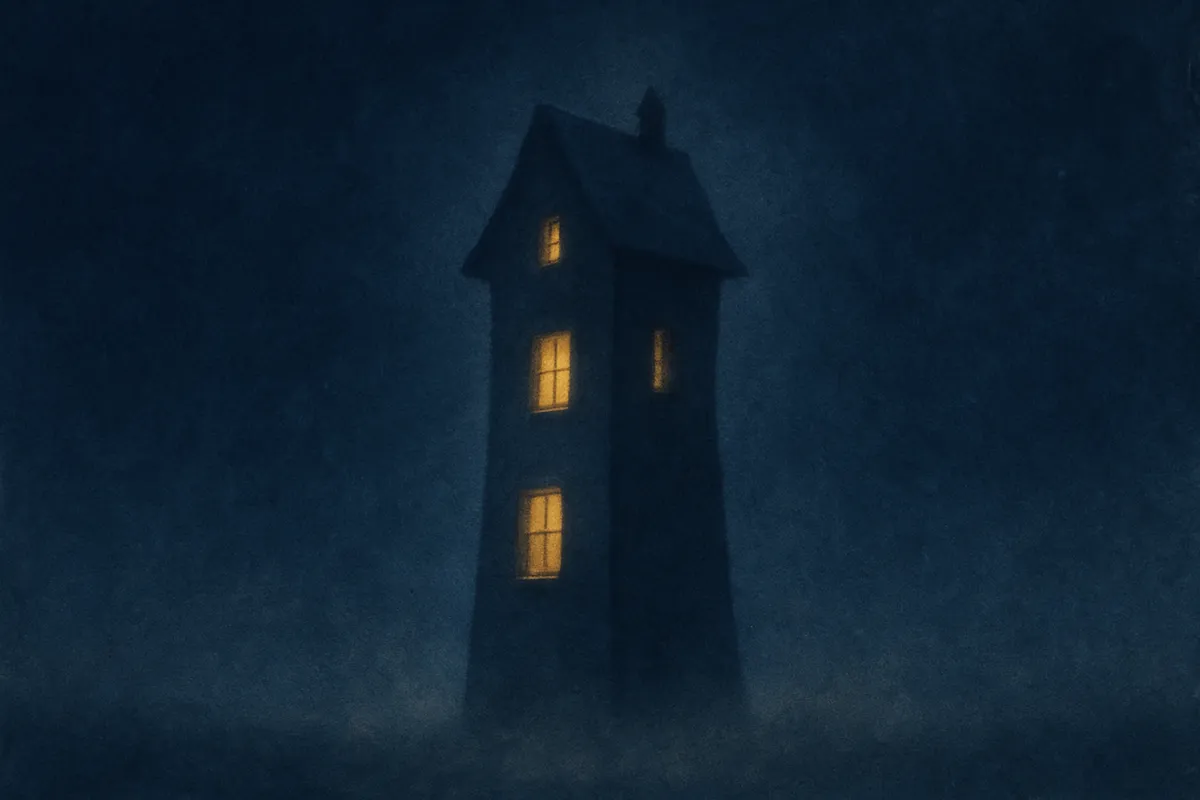
Everyone has a house dream eventually — the childhood kitchen with one wrong window, the corridor that shouldn't fit inside the floor plan, the door you've never noticed before. And unlike most symbols, this one the traditions agree on almost completely: the house is you.
What the traditions say
The old European dream books read the house as the dreamer's own life and household. Solid walls: good standing. Disrepair: neglect somewhere real. Discovering new rooms: possibilities not yet lived in. The childhood house: the past asking for a visit. Even disasters point inward — a fire or flood inside the house turns the fire and water readings onto your own four walls.
The tabir tradition attributed to Ibn Sirin reads it much the same way, with a surveyor's precision: the house is the dreamer's world and household, and its soundness is their standing. An unknown, spacious house is graded by its light and order; repairing a house means mending one's affairs; the door is the household's gate-keeping and the roof its protection. The Polish sennik canon adds its own warm, terse lines: building a house, good fortune earned slowly; an old family house, longing or a matter left there; new rooms discovered, unexpected possibilities.
It's rare for three traditions to rhyme this closely. Where the snake divides interpreters, the house unites them — the building and the dreamer are one, and the state of the rooms is the state of the life. The old books read teeth as the household's people; the house is the household itself.
What psychologists notice
If Jung is named anywhere in a dream dictionary, it should be here. His own dream of a many-storied house — descending from a furnished upper floor through older and older storeys, down to a cellar and what lay beneath it — famously shaped his map of the psyche. The house he was walking through, he came to believe, was himself: each floor a layer, and the deeper he went, the older and less familiar what he found.
That dream still organizes how psychologists read house dreams. The known rooms are the lived life; discovered rooms are capacities not yet entered; the cellar is what's stored below awareness; and the childhood home is the self that was formed there. When your dream house sprouts an extra wing, the Jungian reading is quietly optimistic — the self proposing that there's more of you than you're currently using.
A question to sit with
If your life were this house, which room have you not opened in a while — and what do you suppose is still in there?
If you discovered rooms you didn't know were there
The beloved variant, and the brightest. The folk books read new rooms as possibilities not yet lived in; the sennik says simply "unexpected possibilities"; the Jungian line says capacities not yet entered. Dreamers describe the same feeling almost every time — astonishment that this was here all along. Notice what the room held and what condition it was in: a furnished, sunlit room reads differently from a bare one, and both differently from a room someone else has clearly been living in. These dreams often visit at the edge of a change you haven't fully admitted you want.
If it was your childhood home
The past asking for a visit, the old books said — and psychologists largely agree, reading the childhood home as the self that was formed there. These dreams cluster around transitions: moves, endings, the death of a parent, a birthday with a zero in it. The telling details are the differences — what the dream changed, added, or locked compared with the house you actually knew. If this dream recurs, it's worth writing down each visit; the changes from dream to dream are often the real story.
If the house was falling apart
Not the omen it feels like. The dream books read disrepair as neglect somewhere real — something unmaintained, not something doomed — and the tabir tradition pairs it with the remedy: repairing the house means mending one's affairs. The useful question is which part was failing. The old readings gave the parts meanings — the roof protection, the door gate-keeping, the foundations standing — and your dream usually knows which one it chose.
If you were locked out
The sennik canon's entry for a locked door is two words: patience, wrong moment. A threshold, not an exile. Psychologists hear something more personal — locked out of your own house can track feeling estranged from your own life, a role, a former self. And no version of this dream is a forecast: a locked door in a dream doesn't mean a door is about to close on you in waking life. Dreams reflect the dreamer, not the future.
A dictionary can tell you what houses mean in general. It can't know that your dream house is always your grandmother's, or that the new rooms only appear in the weeks before you change jobs. That's the part only your own dreams, remembered together, can answer — and it's exactly what Dreamlock is built to do.