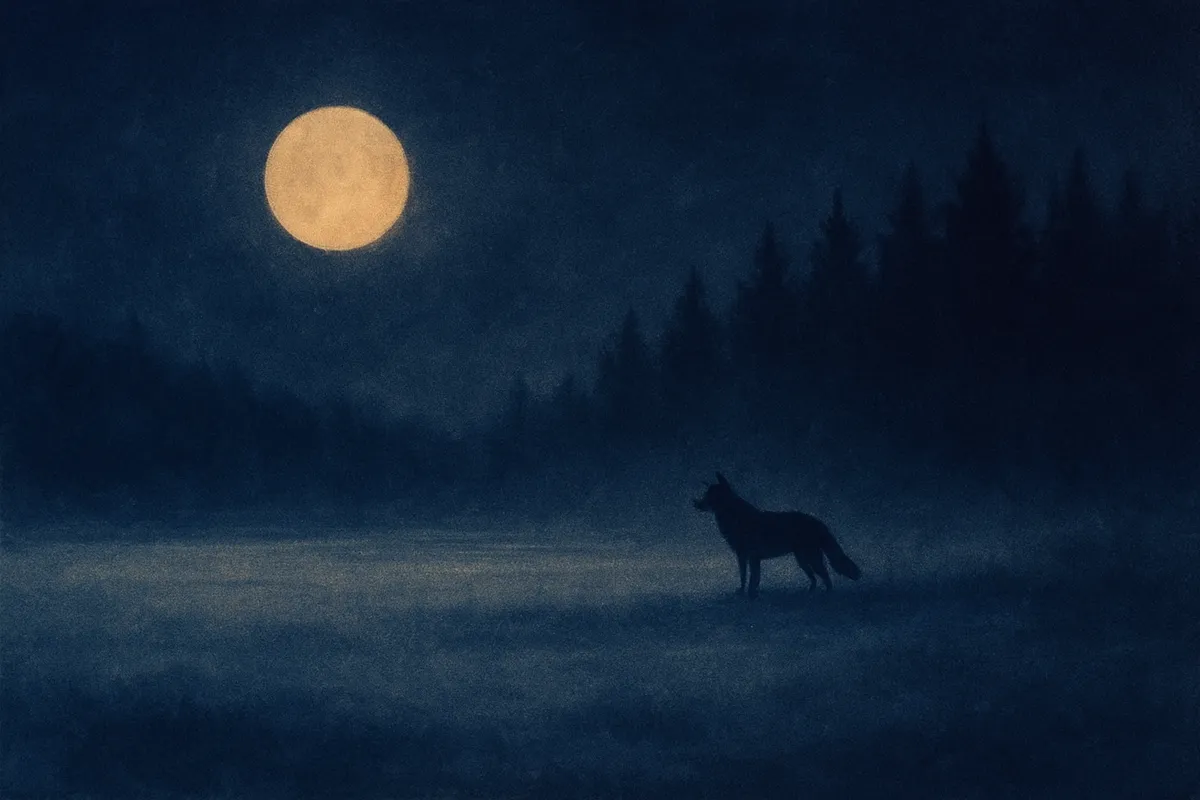
The wolf may be the symbol where the old books and the modern dreamer disagree most. Every tradition that wrote the wolf down wrote it with dread — and yet the person waking from a wolf dream today is as likely to feel awe as fear. Both readings deserve a hearing, because the dream books were describing a neighbor they feared, and you may have dreamed of an animal you admire.
What the traditions say
The European folk dream books read the wolf as the winter enemy: a threat prowling at the edge of one's affairs — hunger, a rival, a hard season. Escaping the wolf or driving it off meant danger mastered; a wolf among the flock meant losses through a predator in trusted ground. Tellingly, the tamed wolf is nearly absent from the old books. They did not trust it.
The Islamic tabir tradition is harsher still: the wolf reads as an oppressive enemy or a treacherous man, and a wolf entering one's house as a thief or an unjust intruder into one's affairs. Repelling the wolf meant safety from him. Where the same tradition allows the snake a bright reading in the right context, it offered the wolf no kind reading at all.
The Polish sennik canon adds patience to the portrait: the wolf is a dangerous rival circling — an enemy with time on his side. Hearing a wolf howl, a warning from a distance; a wolf at the door, guard the household's affairs; driving a wolf off, a rival discouraged — for now.
Three canons, one verdict. That unanimity is itself information: for the people who compiled these books, the wolf was not a metaphor. It was winter.
What psychologists notice
The modern reading keeps the teeth but moves them indoors. Psychologists notice that wolf dreams tend to appear when the dreamer feels stalked by something patient — a rivalry, a debt, a fear that doesn't lunge but doesn't leave. The Jungian line adds the wilder possibility: the wolf as your own untamed appetite, met at the treeline — the part of you that never agreed to be domesticated.
And then there is the reading the old books never needed: "lone wolf" dreams often track isolation more than danger. The wolf standing apart may not be hunting you. It may be showing you where you're standing.
A question to sit with
When the wolf appeared, were you afraid of it — or were you, somewhere under the fear, glad to see it?
If the wolf watched from a distance
This is the sennik canon's wolf exactly: the rival with patience, circling without committing. The modern ear hears something in your waking life that has your attention but hasn't made contact — a tension at work, a conversation postponed. But note your feeling tone. A wolf watched across a snowfield is also one of the few forms of this dream that can feel beautiful, and if yours did, the distance may be the point: something wild you can only admire from far away.
If it came for you
The folk books were practical here: escaping or driving the wolf off meant danger mastered, and the tabir tradition read repelling the wolf as safety from an oppressive enemy. Psychologists tend to hear the patient threat finally moving — pressure that ended its long circling. If the dream became flight, the pursuit itself may matter more than the pursuer; that pattern has its own page at being chased. Either way, what you did next — fought, ran, stood still — usually says more than the attack.
If you heard howling
The sennik canon read the howl as a warning from a distance — trouble announcing itself before arriving. The modern reading is less ominous and more interesting: a howl is a voice locating other voices, and dreamers often describe heard-but-unseen wolves in seasons when something unnamed is asking for attention. A howl can also simply sound lonely. If yours did, read it alongside the lone wolf below rather than the old warnings.
If the wolf was alone
The old books barely distinguish the solitary wolf — an enemy is an enemy. The modern reading makes the distinction central: lone-wolf dreams often track isolation more than danger. The dreamer who calls herself a lone wolf by day may meet the actual animal at night and find it less romantic — beautiful, yes, and cold. If this wolf didn't threaten you, ask whether the dream was about a predator at all, or about the distance between you and your pack.
A dictionary can tell you what wolves meant to people who feared winter. It can't tell you why yours watched without moving, or that it arrives in the weeks when you've gone quiet on everyone. Dreams like this fade by breakfast — catching them is half the work — and the patterns only show up when your dreams are remembered together. That's exactly what Dreamlock is built for, and it's coming soon.