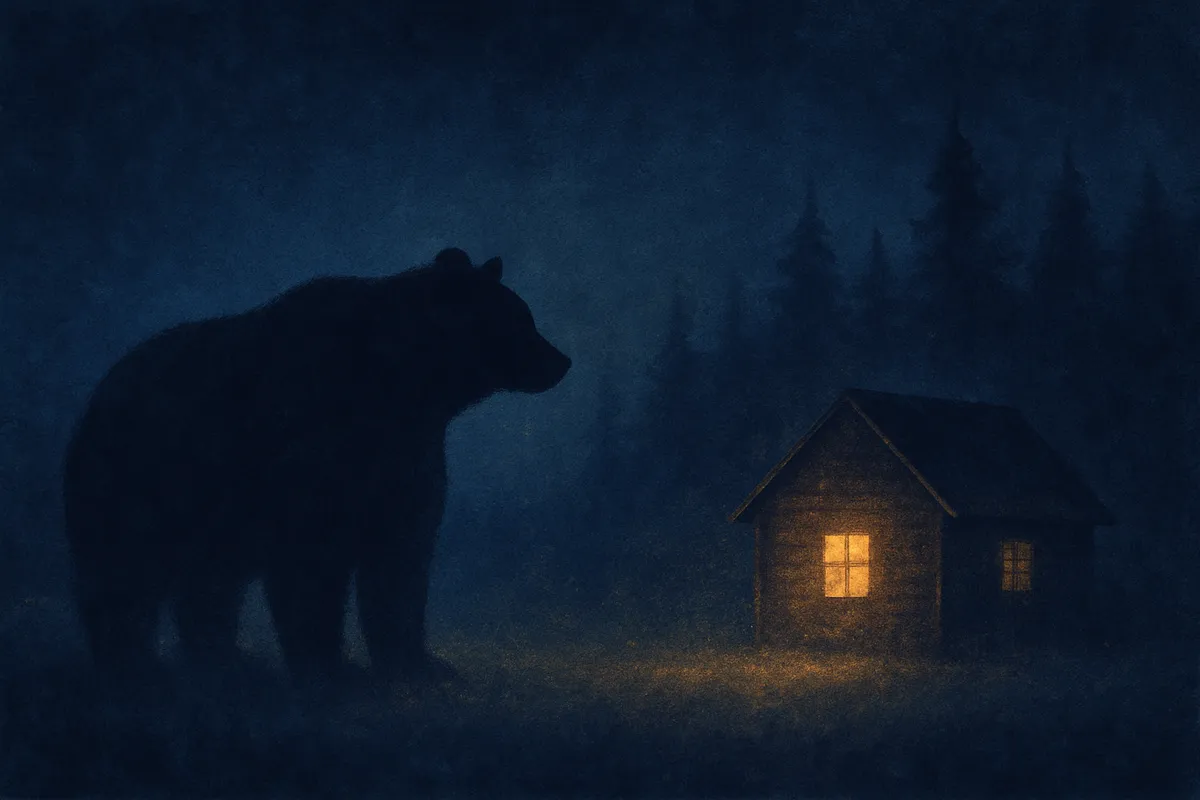
Bear dreams have a strange temperature. The animal could end you, and yet dreamers often report standing near it without running — watching it the way you'd watch weather. Psychologists have a name for that mix: overwhelming force with a protective face. It's the dream's way of drawing something enormous that also, somehow, takes care of you.
What the traditions say
The European folk dream books refused to pick a side on the bear. It was a powerful, unpredictable adversary — or a rough, rich friend, and the books let the bear's behavior decide which. A bear chasing you meant trouble from a strong quarter. A sleeping bear was a great matter best left undisturbed. Besting a bear meant a formidable difficulty overcome. The reading was never in the animal itself; it was in what the animal did.
The Islamic tabir tradition kept the darker half: the bear as a crafty, heavy adversary — a foe of strength without refinement, danger met bluntly rather than by cunning. Overcoming the bear signaled a hard matter mastered; fleeing one was not cowardice but prudence before an unequal contest.
The Polish sennik canon read the bear as a heavy matter on the path — an obstacle of size, met suddenly. Its gradations are practical to the point of dryness: a bear standing is a confrontation you can still walk away from; fighting a bear is a struggle demanding all your strength; a bear cub is a small trouble that will grow if fed.
Across centuries and languages, the shape holds: the bear is never a verdict. It's a question about behavior — the bear's, and yours.
What psychologists notice
Psychologists notice that bear dreams cluster around dominant figures whose care and power arrive in the same body — parents, bosses, anyone who both shelters you and could flatten you. That's what separates the bear from a snake or a spider: those tend to stand for what you distrust, while the bear stands for what you depend on and fear, at once.
The variants sort along one axis — where the force is pointed. A charging bear: a confrontation feared. A bear minding its own business: power present but not aimed. Hibernation imagery: strength dormant, in the dreamer or in someone close. Notice that none of these is about the bear's size. The size is a given; the dream is negotiating the direction.
A question to sit with
Who in your life holds both the warmth and the weight — someone whose approval shelters you and whose anger you quietly plan around? That's usually whose shape the bear is wearing.
If the bear minded its own business
The most common bear dream, and the least discussed, because nothing happens: the bear is simply there, foraging or walking, and you watch. Psychologists read this as power present but not aimed — you've registered a large force in your life and you're gauging it, not fleeing it. The folk books would tilt this bear toward the rough, rich friend. If the dream felt more like awe than fear, trust that feeling; it's the dream's own reading.
If it charged
A charging bear collapses the distance the previous dream was measuring. The folk books read it as trouble from a strong quarter; the modern ear hears a feared confrontation — often with exactly the person whose care you also rely on, which is why these dreams feel so disloyal to have. If the dream ran on into pursuit, the mechanics of being chased apply: what you flee in a dream tends to be what you're avoiding awake, and the chase usually ends when the avoiding does.
If it was sleeping
The folk books' most tactical entry: a sleeping bear is a great matter best left undisturbed — a conflict, a history, a subject that costs nothing while it rests and everything if roused. Psychologists see the same image from inside: strength dormant, sometimes your own. The dream's real content is usually the temptation — you rarely dream of a sleeping bear you feel no urge to wake.
If it was a cub
The sennik canon owns this one: a cub is a small trouble that will grow if fed. The charm is the trap — the dream gives you something endearing that carries the adult animal inside it. Dreamers often meet this one around small compromises: the minor debt, the joke that lands wrong, the task quietly absorbed at work. If a cub turned up in your dream near your house, the sennik reading would only sharpen — the small growing thing is already inside the walls.
A dictionary can tell you what bears mean in general. It can't see that yours stood at the edge of your childhood backyard, or that it only shows up the week before you visit your father. Patterns like that live across many dreams, not one — which is why Dreamlock is built to remember them for you: you murmur the dream while it's fresh (there's a knack to that — see how to remember dreams), and it keeps your own symbol index, so the next bear arrives with its history attached. Coming soon to the App Store.