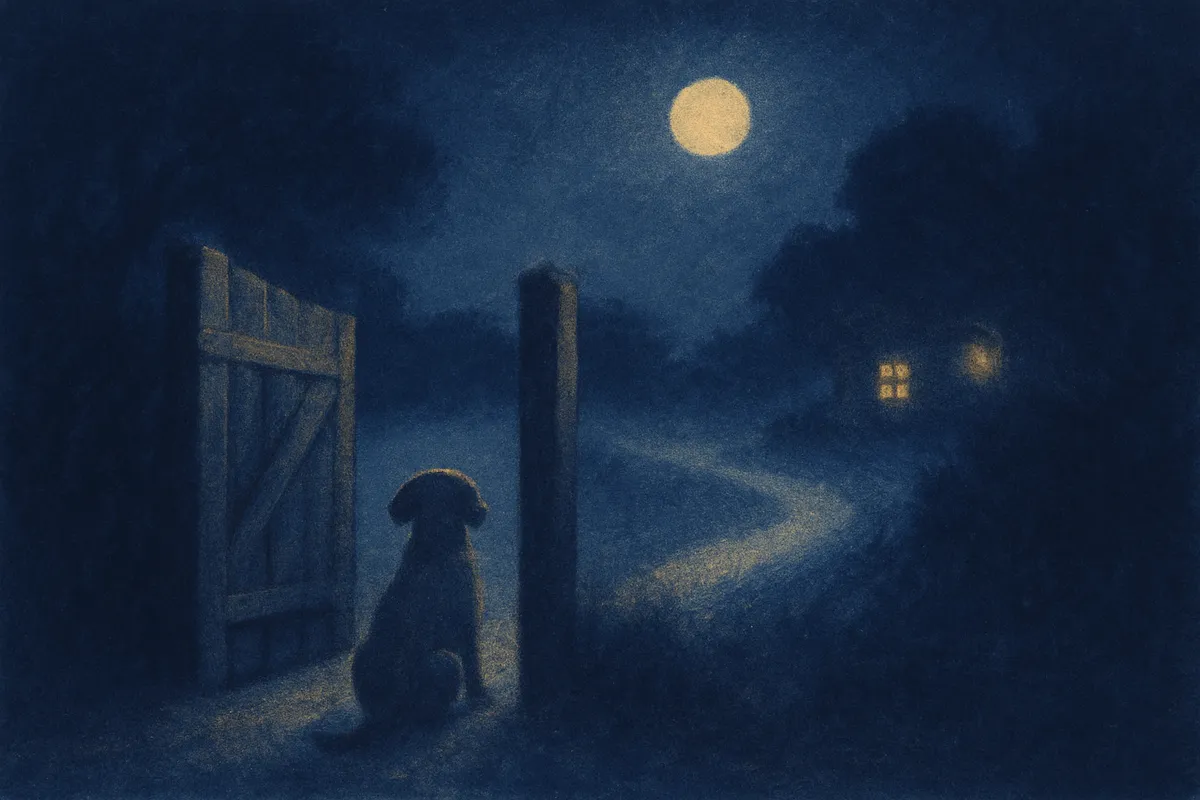
The dog is the friend of the dream books. Traditions that are suspicious of nearly everything — cats, strangers, standing water — go warm when a dog walks into the dream. Which is exactly why the bite, when it comes, lands so hard: it's hurt from the one direction the books had marked safe.
What the traditions say
The European folk books read a friendly dog as a loyal friend, or good news of one. A growling or strange dog turned the entry: a friendship under strain, or a false one. And a dog's bite meant harm from close quarters — trouble not from an enemy at a distance but from inside your own circle. Artemidorus, back at the root of the tradition, read dogs by their relation to the dreamer: one's own dog and a stranger's were different signs, and the difference mattered.
The Islamic tabir tradition graded the dog by its bearing. A guard dog: protection and a watchful companion. A barking or snapping dog: an insolent adversary of little weight — noise, not danger. A hunting dog read favorably, as gain sought and taken lawfully. But the bite kept its edge here too: harm from a mean quarter.
The Polish sennik canon is the warmest of all. A dog: a faithful friend. A dog wagging its tail: good company coming. Feeding a dog: a friendship tended and repaid. Even the barking dog gets a generous double reading — gossip at the gate, or a warning given in time. Only the bite stays dark: betrayal where trust was placed.
Set that beside the snake, which every canon treats as a cipher for threat, and the pattern is striking: the dog is where the dream books put their trust. The readings only turn when the dog does.
What psychologists notice
The psychological reading is loyalty and instinct, domesticated. Dog dreams tend to track the state of the dreamer's trusted bonds — a warm dog alongside warm connection, a threatening dog when trust is strained. The biting dog is the sharp version of the same signal: hurt arriving from where safety was assumed.
One honest caveat colors everything else: your waking history with dogs shapes what a dream dog can mean. A dreamer who grew up with dogs and a dreamer who was once bitten are not having the same dream, even if the scenes match. Psychologists treat that history as data, not noise — and any reading of your dog dream that ignores it is guessing.
A question to sit with
Which of your trusted bonds — the ones you never bother to check on — has the weather changed around lately? That's usually where the dream dog is standing.
If the dog was friendly
This is the reading the traditions agree on most cheerfully: the folk books said a loyal friend, the sennik said good company coming, the tabir tradition saw a watchful companion. The modern ear hears something quieter — a bond that's well, or a wish for one. Notice who the dog seemed to belong to, and whether anyone in your waking life has that same easy, undemanding presence. If no one does, the dream may be pointing at the vacancy.
If it growled or bit you
The growl and the bite are different weights. A growling dog, in the folk reading, is a friendship under strain — warning, not wound. The bite is the wound: every canon reads it as harm from close quarters, and psychologists hear it as trust already breached, or braced for. If the dog chased you through the dream, that pulls in the oldest nightmare shape of all — worth reading alongside being chased, where the question is always what gains on you when you stop running. Either way, the useful detail is which relationship the dream borrowed the dog from. A bite in a dream harms no one; a strain you've stopped looking at might.
If it was your own dog
Artemidorus would have insisted on the distinction, and he was right to: your own dog arrives in a dream carrying your whole history with it. Often the dream is simple companionship replayed, and needs no interpreting at all. If your dog has died, dreaming of them is one of the most common and most tender dream experiences people report — closer in feeling to dreams of a lost loved one than to anything in the symbol dictionaries. What your own dog was doing — waiting, leaving, guarding, failing to recognize you — tends to say more than the dog itself.
A dictionary can tell you what dogs mean in general. It can't know that yours was your childhood dog, or that she only shows up in the weeks when an old friendship goes quiet. That's the part only your own dreams, remembered together, can answer — Dreamlock is being built for exactly that, and if your dreams tend to slip away by morning, start with how to remember them.