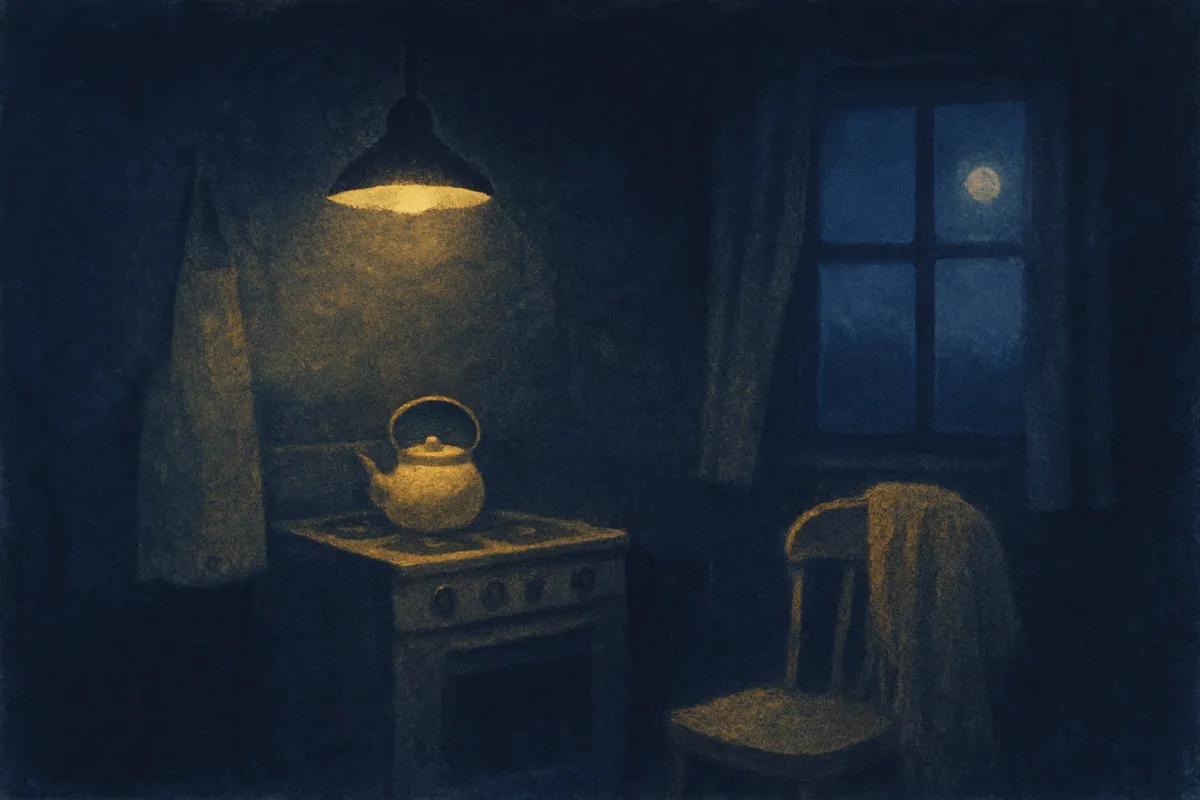
Of all the visits a dream can pay, this may be the one people hold longest. She was the first person you knew, and when she comes back in a dream the feeling on waking is rarely neutral: comfort, ache, often both in one breath. The wider dream of a dead loved one has its own page.
| Variant | What the old books read | Source |
|---|---|---|
| Her hug | A parting, in an entry written for a living mother | Golden Wheel 1862 |
| Hearing her call you | Duties neglected, the wrong course in business | Miller 1901 |
| Her tears | Affliction near at hand | Miller 1901 |
| Her ghost | Danger nearby; a caution against strangers | Miller 1901 |
What do the old dream books say about a late mother?
Neither book cited here was sentimental about mothers. Miller's 1901 dream dictionary (Ten Thousand Dreams Interpreted) called dreams of the dead usually a warning, and read seeing one's dead mother as a warning to control an inclination toward morbid thoughts and ill will toward others. His mother entry is warmer: a mother seen at home meant pleasing results in any enterprise. His lines on her call and her crying don't say whether she is living or dead; we give them here because they are the scenes dreamers of a late mother report.
The Golden Wheel Dream-Book (1862) knows only a living mother, and reads her against expectation: fondling her meant a parting, quarrelling with her a generous kindness from her.
What neither book offers is comfort, and comfort is what most dreamers wake with. That gap is honest to report. The books recorded what worried people then; the dream itself tends to answer what the dreamer needs now.
What she did
These are readings from the old dream books, reported as history — no dream foretells the future.
What does it mean when your late mother hugs you in a dream?

She holds you, and for a moment nothing is lost. The Golden Wheel Dream-Book's only embrace is written for a living mother: fondling her "shadows forth her loss", or a parting. For a mother already gone, that old warning has nothing left to foretell. Psychologists hear the plainer thing: a visit that comes when you are carrying something heavy. This is a dream to keep, not decode.
Was your dream different? Dreamlock reads the one you actually had →
What does it mean to talk with your late mother in a dream?
You talk as you used to, about nothing, or about the thing you never said. Miller and the Golden Wheel are silent on a conversation with a dead mother. Psychologists notice her words tend to be something the dreamer already half-knows, heard in the voice they trust most. Take them seriously, and take them down quickly.
Was your dream different? Dreamlock reads the one you actually had →
What does it mean to hear your mother calling you in a dream?
Your name, in her voice, from another room. Miller read hearing your mother call as a sign of duties neglected and "the wrong course in business". The modern reading is gentler: a call back to something, a person, a habit, a part of yourself, that you've let slip.
How she seemed
What does it mean to see your late mother crying in a dream?
Her tears are hard to wake from. Miller read hearing her cry as if in pain as affliction near at hand, for her or for the dreamer. Psychologists hear care more than warning: something close, a person, a friendship, your own health, running on empty. A dream like this usually asks for one act of attention.
Was your dream different? Dreamlock reads the one you actually had →
What does it mean when your late mother seems happy in a dream?
She looks well, younger, at ease. The two books cited here don't read her smile. Many dreamers take it as peace, and psychologists note these dreams often come as grief softens: the mind setting down a heavier picture of her last days for a lighter one.
What does it mean to see your mother's ghost in a dream?
A pale shape that is and isn't her. Miller read the ghost of either parent as a sign the dreamer was exposed to danger, with a caution against partnerships with strangers. Psychologists hear unfinished business: a conversation, an apology, a goodbye that didn't happen.
What do psychologists say about dreams of a late mother?
Psychologists notice when she comes. The late mother tends to arrive when questions of belonging, nourishment or the original bond are stirring: a move, a new child, a season of feeling unheld. Jung wrote of the Great Mother, generous and devouring at once, and some dreams of her are quietly complicated. That is ordinary too.
Either way, the dream is usually rehearsing one of two things: what it means to be held, or what it means to let go of being held.
A question to sit with
Where in your life right now are you needing to be held, and where are you practising letting go?
A dictionary can hold what the old books said about mothers. It can't hold her: the kitchen she stood in, the thing she always said, how often she visits and what her visits sit beside. That is what Dreamlock, on the App Store for iPhone, is built to keep: a dream of her written down while it's still warm, painted, and remembered.