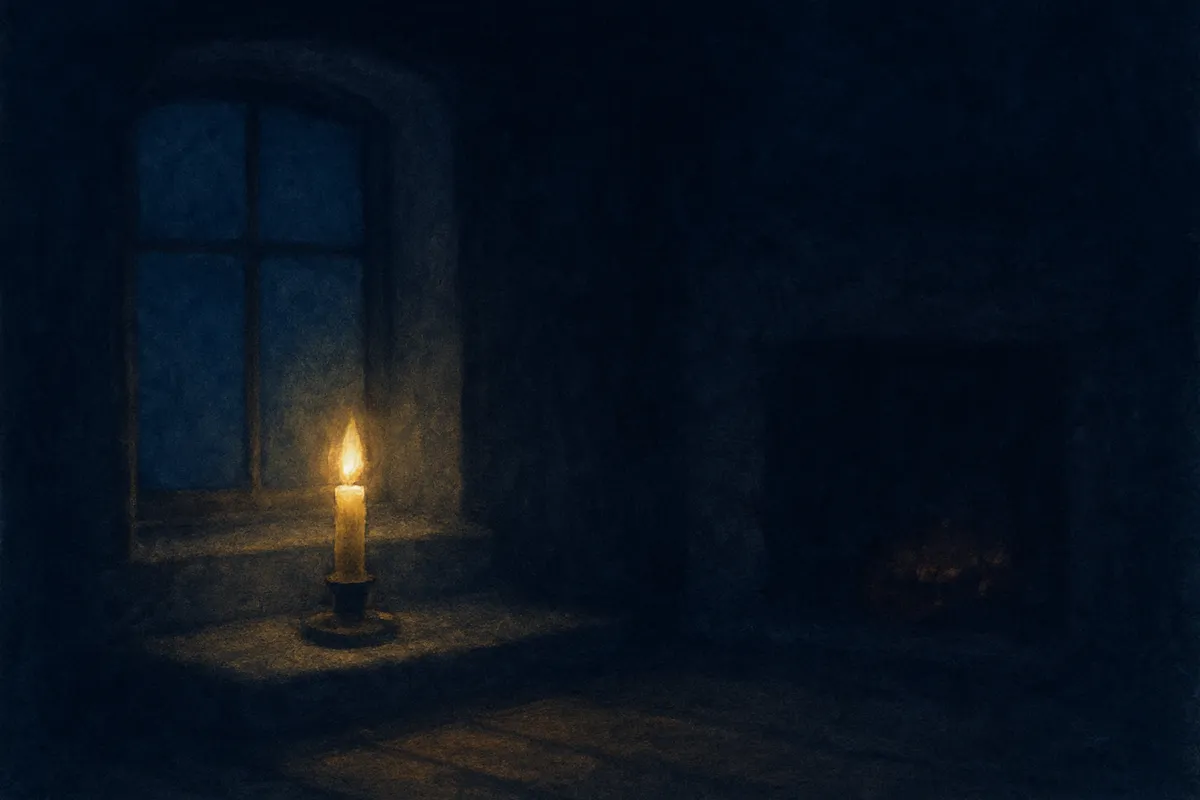
Fire dreams burn brighter than most — people wake remembering the color of the flames, the heat, whether they ran toward it or away. And every tradition that ever kept a dream book asked the same first question of them: was the fire where it belonged, or was it loose?
What the traditions say
The old European dream books were double-edged about fire in every edition. A hearth fire, warm and contained, meant home fortune and love — the household in good order, the season kind. Fire loose and spreading meant quarrel, loss, or consuming passion: the same heat, no longer serving anyone. Watching a fire burn at a distance was read as news coming; being burned, a lesson arriving the hard way.
The tabir tradition attributed to Ibn Sirin handled fire gravely and drew the same line even more sharply. Fire could signify authority and power — but a spreading, devouring fire read as strife or oppression, and a fire in one's own house as discord within it. The gentler readings were domestic: a cooking fire or a lamp meant benefit and household provision.
The Polish sennik canon, terse as ever, scatters fire across several bright lines: fire seen — surprising news or sudden love; fire fought — a quarrel mastered; being burned — losses through haste; a stove burning well — home peace. And the sennik reads smoke as its own symbol, separate from flame — more on that below.
Three traditions, one shared instinct: fire itself is neither good nor bad. What matters is whether it's tended.
What psychologists notice
Psychologists read fire as intensity — anger, desire, urgency, transformation — and, like the old books, they ask what the fire is doing rather than whether it appeared. Contained fire often accompanies harnessed drive: a project running hot but under your hand. Spreading fire tends to show up when a situation or a feeling is outgrowing control — the argument that keeps reigniting, the workload past its edges. And watching something burn is frequently a letting-go in progress, welcome or not.
The useful move, in this reading, is to name the heat. Somewhere in waking life there is something burning — the dream is rarely subtle about the temperature, only about the address.
A question to sit with
Where in your life right now is there real heat — and is it warming something, or getting away from you?
If the fire was contained (a hearth, a candle)
The gentlest fire dream there is, and the traditions agree on it unusually well: the folk books' hearth meant home fortune and love, the tabir tradition's lamp and cooking fire meant provision and benefit, the sennik's well-burning stove meant home peace. The modern reading matches — drive and warmth with a container around them. If the flame in your dream stayed where it was set, the old books would tell you the household, in the widest sense, is holding.
If it was spreading
Loose fire is where every tradition turns serious. Quarrel and loss in the folk books, strife in the tabir reading, and in the psychological register a feeling or situation outgrowing its container. The detail worth keeping from the dream is what you did: the sennik reads fire fought as a quarrel mastered, and dreamers who battle the blaze often describe the dream as urgent rather than hopeless. What was catching, and how fast — that's the part a dictionary can't see.
If your house was burning
The dream books read the house as the dreamer's own life and household, so a burning house points the fire reading inward: the sennik canon says quarrel in the family, and the tabir tradition reads a fire in one's house as discord within it. This is less about walls than about the circle inside them. If this dream came with real fear, note where in the house the fire started — the old books would have asked exactly that.
If there was smoke without fire
A sennik specialty: smoke without fire means rumors — something visible and drifting with no clear source. It's a strangely precise little entry, and the modern reading barely needs to update it: talk, tension, or worry you can sense in the air but can't yet trace to a flame. If the smoke in your dream had you searching for the fire, ask what you're currently trying to locate the source of by day.
None of this tells you what your fire dream means — a hearth means one thing in a season of contentment and another in a week of held-back anger, which is why we don't read dreams as predictions. The real answers live in your own pattern: what you dream alongside fire, and when it returns. That's what Dreamlock — coming soon — is built to hold: it listens to your dream while you're still half-asleep, remembers it, and over time shows you what fire means in your dreams, not everyone's. Until then, the best first step is simply learning to remember them.