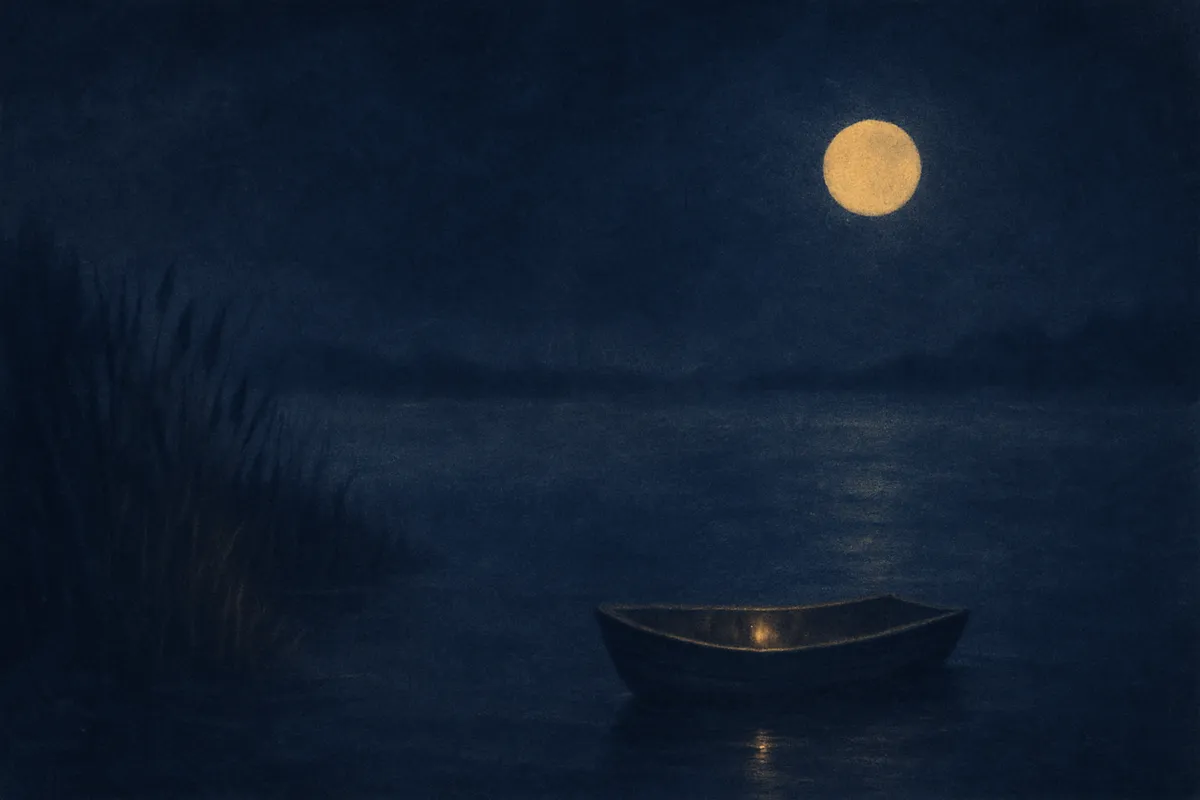
Everyone dreams of water — the flooded street, the still lake, the tide coming in — and the traditions, which quarrel about nearly everything else, agree on how to read it. Where a snake is read by what it does, water is read by what state it's in. The condition of the water is the message; everything else is scenery.
What the traditions say
The rule is as old as the dream books themselves. Artemidorus and the European folk tradition that descended from him read clear, calm water as good fortune, health, and honest dealings, and murky, troubled, or flooding water as confusion and trouble arriving from outside. Crossing water meant a change or a journey; drawing or drinking clean water, gain.
The tabir tradition attributed to Ibn Sirin gives water perhaps its richest treatment anywhere: clear water as lawful provision, life, and knowledge; murky or stagnant water as hardship, or gain that isn't clean; drinking clean water as well-being; entering deep water as entering a weighty worldly matter. Even rain is read by its manner — gentle rain as mercy, violent rain as trial.
The Polish sennik canon is terse as ever: "clear water — joy and health; murky water — gossip and trouble; flood — upheaval in the household; drawing water — modest, honest gain."
Notice how rare this is. Traditions that split sharply on other symbols — gold is fortune in one canon and burden in another — close ranks completely on water. When every dream book on earth applies the same rule, the rule is probably telling you where to look.
What psychologists notice
Psychologists have their own version of the same rule, and it's the standard shorthand of the field: water as emotional life. Its state — clear, murky, rising, frozen — tends to track how manageable feelings currently are. Depth often reads as what lies under the surface of awareness: present, but not yet in view. And flooding water accompanies periods when emotion arrives faster than it can be processed.
Which quietly turns the oldest rule in the dream books into a modern question: whatever the water was doing in your dream, something in your waking life is probably doing it too.
A question to sit with
If the water in last night's dream were an honest report on your life this month — clear, murky, rising, still — would the condition fit? And if it was rising: rising from where?
If the water was clear
The brightest reading in every canon. The old books called it good fortune, health, and honest dealings; the tabir tradition, lawful provision and knowledge; the sennik, joy. Here is the one place we part ways with the tradition: they called it luck, and dreams don't predict anything — not the good outcomes either. Read clear water instead as a mirror held up to something that currently runs clean: a relationship without residue, work you're not ashamed of, a decision made honestly. The dream isn't promising anything. It's noticing.
If it was murky or rising
The folk books read murky water as confusion and trouble arriving from outside; the sennik hears gossip in it; the tabir tradition, hardship or gain that won't bear inspection. Rising or flooding water is the sharper variant — upheaval in the household, in the sennik's blunt phrase, and in the psychological reading, emotion coming in faster than it can be processed. One detail worth retrieving from the dream: whether the water was rising toward you, or you had walked into it. The first tends to feel like circumstance; the second, like something you already suspect about a choice.
If you crossed it
Crossing water is its own dream, older than bridges. The folk books read it as a change of state or a journey — from one condition of life to another, with the water as the difficult middle. And the sennik keeps the old Slavic respect for rivers: crossing one means a decision that cannot be uncrossed. If that line lands on you, it's probably because you know which decision it's pointing at. Which bank you woke on, and what the water was like mid-crossing, carry most of the meaning — and those are exactly the details that dissolve within minutes of waking, so they're worth catching early.
A dictionary can tell you what water means in general. It can't see that your flood always starts in your childhood kitchen, or that the clear lake only visits you after you've finally sent the difficult email. That pattern lives in your dreams, remembered together — and noticing it is exactly what Dreamlock, coming soon, is built to do.