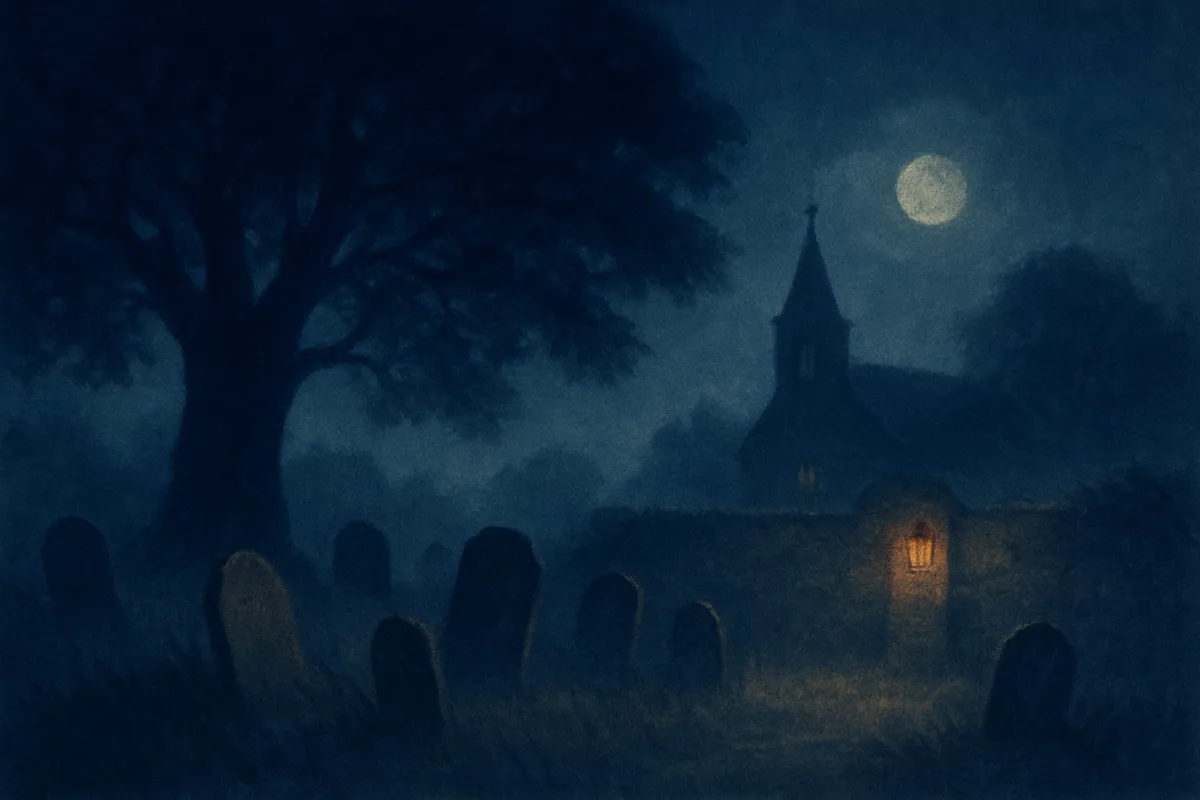
People tend to wake from a cemetery dream quieter than they expected. The place is often calm: rows of stones, long grass, a gate standing open. It is the grave itself, open, empty or with your own name on it, that unsettles. The two old dream books cited here saw the same difference, and read the cemetery far more kindly than the grave.
| Variant | What the old books read | Source |
|---|---|---|
| A cemetery | News of a recovery if well kept, loneliness if forgotten; a long, happy life | Miller 1901; Golden Wheel 1862 |
| An open or empty grave | Disappointment and the loss of friends | Miller 1901 |
| Digging a grave | Uneasiness, overcome if the grave is finished | Miller 1901 |
| Your own grave | Enemies seeking to engulf you, if you are not watchful | Miller 1901 |
| Tombstones | Sadness and disappointment in business | Miller 1901 |
| Bringing flowers to a grave | The continued good health of a family | Miller 1901 |
What does it mean to dream about a grave or a cemetery?
Miller's 1901 dream dictionary (Ten Thousand Dreams Interpreted) gives the grave one of its longer entries and adds separate ones for the cemetery, the churchyard and the tomb. His method is the same throughout: the reading changes with the state of the place and with what the dreamer does there. A beautiful, well-kept cemetery is good news; an old, bramble-grown one is loneliness. Looking into an empty grave is disappointment; finishing the digging of one is victory over opposition.
The Golden Wheel Dream-Book (1862) is shorter and, in one place, much brighter: it read dreaming of a churchyard as a sign of a long and happy life. Its grave entry is about a freshly made grave, which it read as losses, and for lovers as a grave to their dearest hopes. That fresh grave, with Miller's reading of it, is on our page about dreams of death, and we don't repeat it here.
What neither book offers is a cemetery that frightens by being a cemetery. Their darkest readings attach to scenes (an empty grave, one's own grave), and several of their kindest attach to the place itself.
The cemetery and its graves
These are readings from the old dream books, reported as history — no dream foretells the future.
What does it mean to dream of a cemetery?
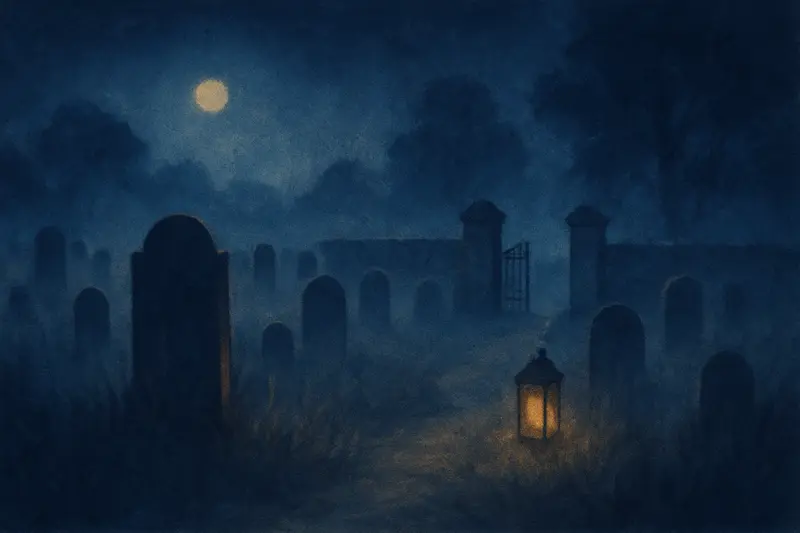
Walking between the stones, often at night, often without fear. Miller's 1901 dream dictionary split the scene by the state of the place: being in a beautiful and well-kept cemetery meant unexpected news that someone mourned as dead had recovered, while an old, forgotten cemetery overgrown with brambles meant living to see all one's loved ones leave. The Golden Wheel Dream-Book (1862) read a churchyard as a long, happy life. Psychologists hear a place for what is finished: memory given its order, a past visited on purpose.
Was your dream different? Dreamlock reads the one you actually had →
What does it mean to dream of an open or empty grave?
The grave is dug, the earth heaped beside it, and nothing is in it yet, or nothing anymore. Miller's 1901 dream dictionary read looking into an empty grave as "disappointment and loss of friends". He also described a graveyard barren except on top of the graves, and read it as sorrow for a time, then greater benefit if the burden was properly shouldered. The modern reading is about something ended but not settled: a loss not yet grieved, a question left open.
Was your dream different? Dreamlock reads the one you actually had →
What does it mean to dream of tombstones?
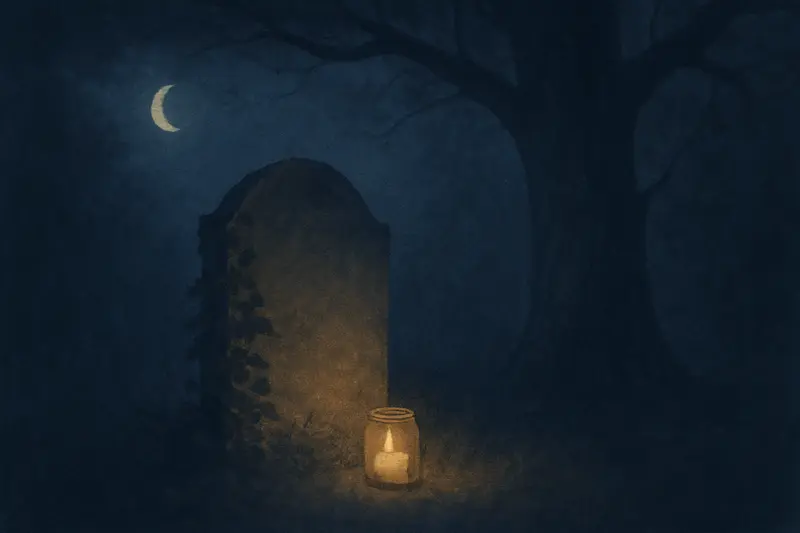
Headstones leaning in the grass, names worn smooth, sometimes one name you know. Miller's 1901 dream dictionary, under "Tomb", read seeing tombs as sadness and disappointment in business, and reading the inscription on a tomb as unpleasant duties to come. The modern reading turns to memory: what is written down about a life, and what you would want written about yours. A name you recognise usually points to a relationship that is still on your mind.
What you did at the grave
What does it mean to dream of digging a grave?
Spade in hand, the hole getting deeper, and no clear idea whose grave it is. Miller's 1901 dream dictionary read digging a grave as uneasiness over some undertaking, with enemies trying to thwart it; but if the dreamer finished the grave, he wrote, the opposition would be overcome, and if the sun was shining, good would come of seeming embarrassment. Psychologists hear an ending being prepared on purpose: a decision to close something, a habit or a role, that you are already working towards.
What does it mean to dream of bringing flowers to a grave?
Flowers laid on a stone, a candle lit, a quiet moment kneeling. It is the gentlest version of this dream, and Miller's 1901 dream dictionary read it gently too: a mother carrying fresh flowers to a cemetery could expect the continued good health of her family. Psychologists hear honest remembrance, often after the rawest stage of grief has passed. The dream frequently arrives around an anniversary, or after a day when that person was much on your mind.
What does it mean to dream of cleaning a grave?
Pulling weeds, wiping moss from the lettering, straightening a vase. Neither Miller nor the Golden Wheel Dream-Book has a scene of tending a grave, so we give no old reading for it. Psychologists read it as care for a memory, and sometimes as duty: a feeling that the past, a family story or a relationship has been neglected and needs attention. How you felt while you worked, calm or guilty, usually tells you which.
Your own grave
What does it mean to dream of your own grave?
Few dreams stop people so completely: your own name on the stone. Miller's 1901 dream dictionary read seeing one's own grave as enemies warily seeking to engulf the dreamer in disaster, who would succeed only if the dreamer failed to be watchful. It is a record of an old fear, not a forecast. Psychologists nearly always read this dream as an ending in the dreamer's life rather than of it: an old self, role or chapter being laid down.
What does a grave dream mean psychologically?
Grave and cemetery dreams belong, above all, to endings. They are common in grief, but not only there: people describe them after leaving a job, a city or a relationship, or when a long chapter closes. The cemetery is where the mind puts what is finished, and the dream often visits it when something is being filed away.
Psychologists pay most attention to what happens at the grave. Visiting and tending read as mourning in progress, done with care. An open or empty grave reads as something ended but not yet resolved. Your own grave reads as a change of identity: the person you were before a move, a loss or a recovery. None of these is a verdict on anyone's life or health. More on the nearby scenes in dreams about the dead.
A question to sit with
What in your life has recently ended but not yet been given a proper resting place?
A dictionary can say what a cemetery meant to Miller in 1901. It can't see that your dream always returns to the same village churchyard, or that it comes back every autumn. That kind of pattern shows only when your own dreams are kept together and read over time. Dreamlock, on the App Store for iPhone, is a private dream journal made for that: it listens to your dream, paints it, and keeps the thread.