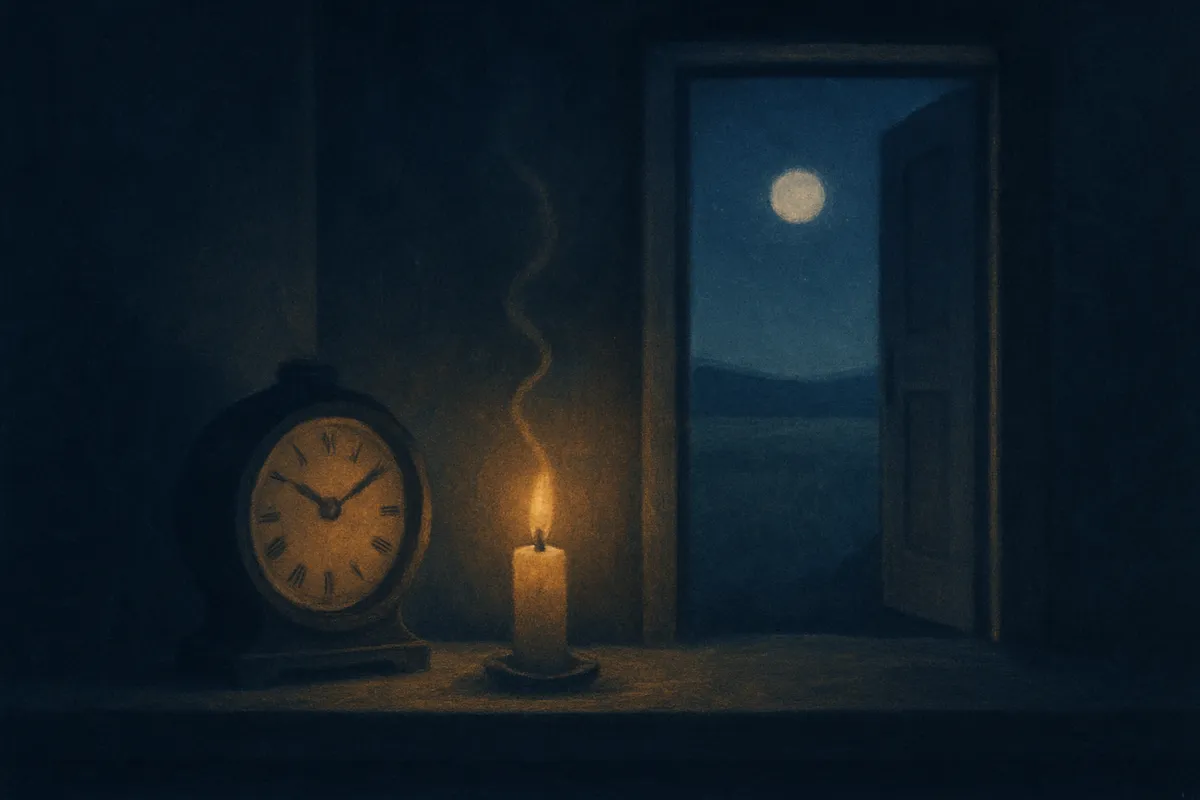
Few dreams follow you into the day like a dream of death. Here is the thing worth knowing first: the three old books we cite mostly read them as something other than death, and the Golden Wheel Dream-Book read them as a wedding.
| Variant | What the old books read | Source |
|---|---|---|
| Your own death | Release from grief; evil from a trusted source | Artemidorus; Miller 1901 |
| Dreaming that you are dying | Affairs neglected and losing value | Miller 1901 |
| Someone else dying | Hasty news from friends; general ill luck | Golden Wheel 1862; Miller 1901 |
| News of a death | Bad news from friends or relatives | Miller 1901 |
| A funeral | A wedding or a pleasure party; an unhappy marriage | Golden Wheel 1862; Miller 1901 |
| A grave | Losses, enemies, uneasiness | Golden Wheel 1862; Miller 1901 |
| Being buried alive | Confinement; a mistake, or riches | Artemidorus; Miller 1901; Golden Wheel 1862 |
What does it mean to dream about death?
The three books point in three directions. The Golden Wheel Dream-Book (1862) read it by contraries: seeing death in a dream meant happiness and long life, and that the dreamer would soon marry or attend a wedding.
Artemidorus, whose Oneirocritica (2nd century) we cite in Friedrich Krauss's 1881 German translation, read dying by the dreamer's situation. For a bachelor it meant marriage, because wedding and death, he wrote, are both turning points of a human life. For a slave it meant freedom, for an athlete victory, for a writer a lasting legacy.
Miller's 1901 dream dictionary (Ten Thousand Dreams Interpreted) was the gloomy one, reading dead relatives as a warning of sorrow and disappointment. Yet he added a long note that death dreams mislead the novice, and often stand for a good thought being pushed out by a bad one.
Even the darkest of the three didn't take the dream literally.
Whose death it was
These are readings from the old dream books, reported as history — no dream foretells the future.
What does it mean to dream of your own death?

Your own death is a hard dream to wake from. Miller gave dying its own entry and read it as evil threatening from the very source that had helped the dreamer's former advancement. Artemidorus read it far more kindly: to dream of dying during an illness or a time of grief meant release from the burden, since the dead are free of it. Psychologists notice the same thing dreamers report: the dying itself often feels calm, closer to completion than horror.
Was your dream different? Dreamlock reads the one you actually had →
What does it mean to dream that you are dying?
Lying on a deathbed, knowing the end is near, is a different dream from dying itself, and Miller treated it differently. He read dreaming that one is going to die as "unfortunate inattention to your affairs", letting their value slip. The modern reading is close to his: something you have let run down, a project, a friendship, your own rest, and some part of you knows it.
What does it mean to dream that someone else dies?
Watching someone else die is almost never about them. The Golden Wheel Dream-Book (1862) gave it a short, neutral line: "To dream you see another person dead, denotes hasty news from friends." Miller read seeing others dying as general ill luck for the dreamer and their friends. Psychologists hear concern for the person, or change moving through the bond itself: a child growing up, a parent ageing, a friendship entering a new season.
Was your dream different? Dreamlock reads the one you actually had →
What does it mean to dream about your child dying?
This is the hardest of these dreams. Artemidorus, Miller and the Golden Wheel have no reading for it. Psychologists read it the calm way: fear for a child is a constant background hum for most parents, and the dream often comes when the child is changing fast, starting school, leaving home, needing you differently. If a dream like this regularly leaves you distressed, that's worth mentioning to someone you trust.
What does it mean to receive news of a death in a dream?
A phone call, a letter: the death arrives as news, unseen. Miller read hearing that a friend or relative had died as bad news soon arriving from some of them, a reading about messages rather than mortality. The modern reading follows the form: something you are waiting to hear, or dreading to be told, about a person or a plan.
How it felt
What does it mean when the death in your dream was peaceful?
Some dream deaths come gently: in sleep, in light, without struggle. None of the three books reads the manner of dying; the nearest is Artemidorus's sense of death as a turning point, like a wedding. Psychologists take a peaceful dream-death at face value: what ended was probably ready to end.
Funeral and grave
What does it mean to dream of a funeral?
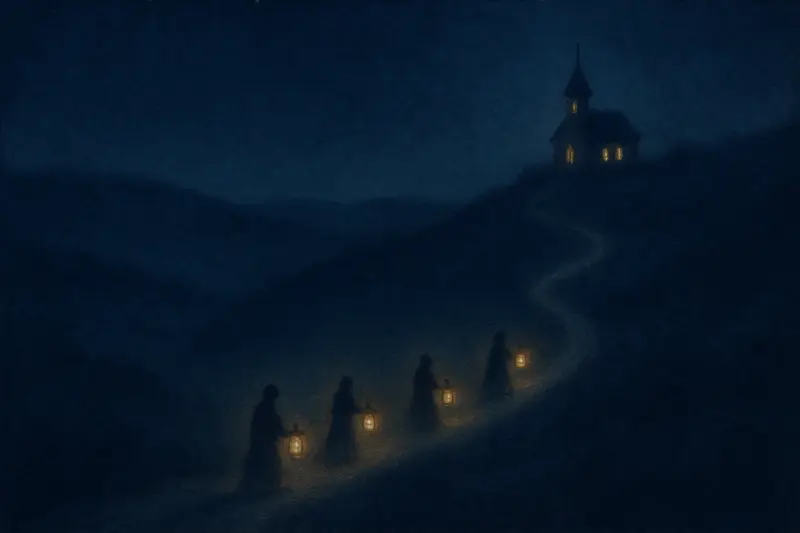
A funeral in a dream is often strangely social, and the books split completely over it. The Golden Wheel Dream-Book (1862) read attending one as a wedding or party soon to come, and seeing one pass as "a pleasure party out of doors". Miller read a funeral as an unhappy marriage and family worries, though a relative's burial in sunshine he read as good health. Psychologists hear a farewell to a chapter.
Was your dream different? Dreamlock reads the one you actually had →
What does it mean to dream of a grave?
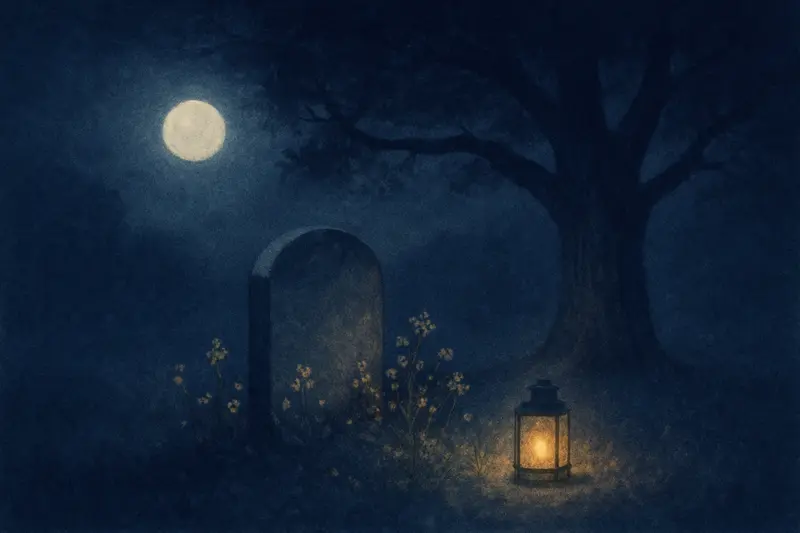
A grave is death made permanent, a place rather than an event. Miller read a newly made grave as suffering for others' wrongdoing, and digging one as uneasiness, overcome if the grave was finished. The Golden Wheel Dream-Book (1862) read a fresh grave as "a sign of losses", for lovers a grave to their dearest hopes. The modern reading is simpler: something you have finished with, or are being asked to.
What does it mean to dream of being buried alive?
Being buried alive is pure claustrophobia, and all three books read it differently. Artemidorus, who read most death dreams as good, made an exception: it was good for no one, meaning mostly imprisonment and confinement. Miller read a great mistake that opponents would exploit, set right if the dreamer was rescued. The Golden Wheel, as far as its damaged print can be read, saw the dreamer rich and powerful. Psychologists hear feeling trapped.
What does a death dream mean psychologically?
The psychological reading rhymes with Artemidorus's turning point. Death dreams tend to accompany transition: the closing of one chapter and the not-yet-formed sense of what the next one is. They cluster around ordinary endings: a move, a role finished, a self outgrown.
Jung read death in dreams as transformation, and dreamers keep confirming the strangest detail of that reading: dying in a dream often carries none of the horror you'd expect, and something more like completion. What dies, the psychological view holds, is usually something you were carrying that no longer needed to be carried. If the person in your dream has actually died, you are holding a different dream, the one we cover in dreams of a dead loved one.
A question to sit with
What in your life has quietly finished, a chapter that has run its course, even if you haven't yet said so out loud?
The general meaning is only a starting point. Whether your death dream was closing a chapter, and which one, shows in the details: the week it came, the room it happened in, whether it has ever come before. Those details fade by lunchtime unless someone keeps them. Dreamlock, on the App Store for iPhone, is built to: it listens to the dream you record, paints it, and remembers the patterns across the months.