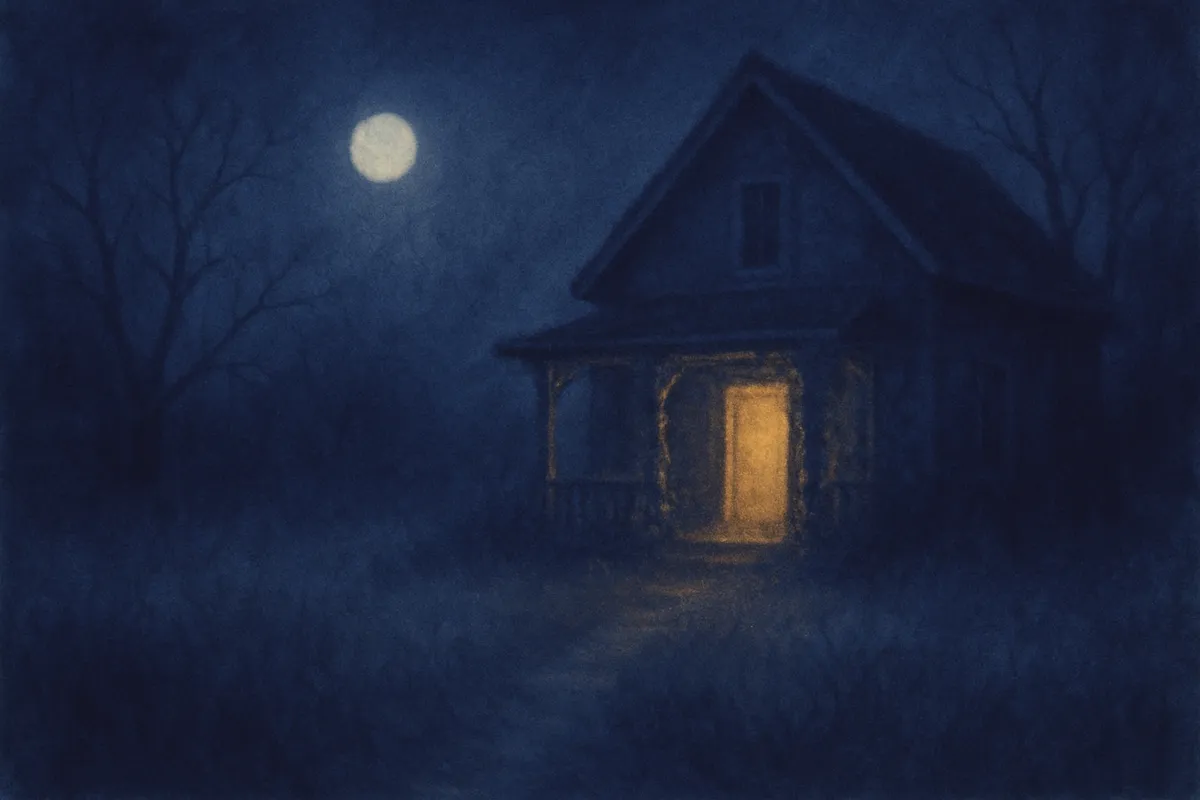
The dream doesn't take you somewhere new; it takes you back. A house you haven't stood in for years, sometimes decades, rebuilt around you down to the smell of the hallway. Where the house in general is read as the dreamer, an old house asks a sharper question: which version of you still lives there?
| Variant | What the old books read | Source |
|---|---|---|
| An old house in ruins | Failure in any effort; sorrow in the family | Miller 1901 |
| Your childhood home | Good news; days of plenty and good company | Miller 1901 |
What does it mean to dream about an old house?
Of the three old books this site cites, only one reads an old house. Miller's 1901 dream dictionary (Ten Thousand Dreams Interpreted) closed his "House" entry with the line "Old and dilapidated houses, denote failure in business or any effort," set against his warm readings of building a house or owning an elegant one. Under "Buildings" he made the same contrast: small new houses meant happy homes, old and filthy ones decay in love and business.
Yet when the old house was your old home, Miller softened. Visiting it meant good news to rejoice over, and his "Door" entry, gloomy about doors in general, made one exception for the door of the house you grew up in. So Miller read the old house two ways at once: as neglect when it was just old, and as comfort when it was yours.
The state of the old house
These are readings from the old dream books, reported as history — no dream foretells the future.
What does it mean to dream of an old house in ruins?
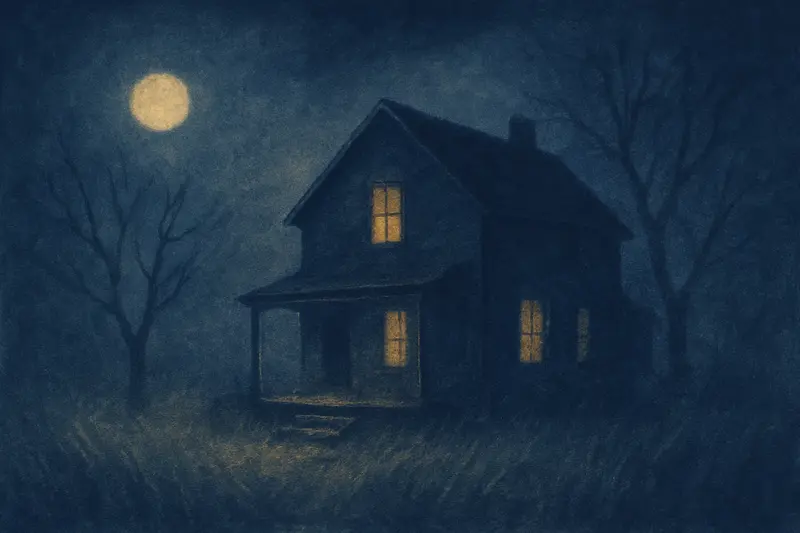
Broken windows, a caved-in roof, ivy through the floorboards. This is Miller's darkest old-house reading: seeing one's old home in a dilapidated state, he wrote, warned of the sickness or death of a relative, and for a young woman, sorrow and the loss of a dear friend. It records an old fear, not a forecast. His "Ruins" entry read ancient ruins more gently, as wide travel and a long-held hope fulfilled. Psychologists hear a part of the past that can't be lived in any more, and the grief of noticing.
Was your dream different? Dreamlock reads the one you actually had →
What does it mean to dream of an old house that still stands firm?
Old, but sound: the paint faded, the walls straight, the door still opening. Miller has no reading for an old house in good repair. The modern reading is generous. Some dreamers wake from this one oddly steadied, as if something back there were load-bearing. It may be worth asking what, concretely, that house gave you that you're still standing on.
Whose house, and what was inside
What does it mean to dream of your childhood home?
The house you grew up in, with one thing wrong. Miller's 1901 dream dictionary read visiting one's old home as good news to rejoice over, and in his "Door" entry, where entering a door usually meant slander, he made the childhood home the exception: "If it is this door you dream of entering, your days will be filled with plenty and congeniality." Psychologists read the childhood home as the self that was formed there, and such dreams often come when life is changing shape again.
Was your dream different? Dreamlock reads the one you actually had →
What does it mean to dream that the rooms of an old house have changed?
The wrong wallpaper, a door where a window was, a staircase that never existed. Miller doesn't read these edits; psychologists hear them as the dream's actual message. The house is memory, and the changes are commentary. Note exactly what differed from the house you knew, because these details dissolve first after waking, and in a recurring old-house dream, what changes from visit to visit is often the whole story.
Was your dream different? Dreamlock reads the one you actually had →
What does an old-house dream mean psychologically?
Psychologists notice that the old house rarely comes back unchanged. Dreamers find rooms they never knew existed, or familiar spaces subtly rearranged, and those edits, not the nostalgia, tend to be the point. The old house invites you back into something unresolved and puts a quiet question in every corridor: what was formed early, and does it still serve? Sometimes the answer the dream proposes is renovation: new rooms built onto an old foundation, rather than the foundation abandoned.
A question to sit with
What did you leave in that house, and is it keeping something safe for you, or keeping you?
Miller could say what a dilapidated house meant in 1901. Whether yours is always the flat you left the year everything changed, or whether the door only opens in dreams you have in spring, is written in your dreams, and only shows when they are remembered together. It's what Dreamlock, on the App Store for iPhone, is built for: it listens to the dream you record, paints it, and remembers every house you go back to.