
Insect dreams are rarely about one insect. It is the line of ants along the skirting board, the flies that won't leave the room, the feeling of something crawling on your arm that stays for a minute after you wake. The old dream books had separate entries for nearly every kind, and between them they tell a consistent story: small creatures, small enemies, small troubles.
| Variant | What the old books read | Source |
|---|---|---|
| Insects crawling on you | Poverty and small ills | Miller 1901 |
| Insects in the house | Ill luck and enemies; unimportant if outdoors | Golden Wheel 1862 |
| Killing insects | Good; obstacles overcome | Miller 1901; Golden Wheel 1862 |
| A sting | Loss or injury from a friendly source | Miller 1901 |
| A swarm | Many enemies | Golden Wheel 1862 |
| Ants | Many petty annoyances; unlucky | Miller 1901; Golden Wheel 1862 |
| Flies | Sickness, and enemies surrounding you | Miller 1901 |
| Worms | Low intrigue; garden worms as health and good fortune | Miller 1901; Golden Wheel 1862 |
What does it mean to dream about insects?
Miller's 1901 dream dictionary (Ten Thousand Dreams Interpreted) has no entry for "insects" as such. It has something better: separate short entries, one for each creature, and they read remarkably alike. Bugs are "disgustingly revolting complications" in daily life. Ants are petty annoyances, flies are enemies and contagion, worms are the low intriguing of disreputable people, beetles on the body are poverty and small ills. Almost nothing in Miller's insect pages is catastrophic; the scale of the creature is the scale of the trouble.
The Golden Wheel Dream-Book (1862) is terser and adds one useful distinction. Vermin, it said, were ominous of ill luck and enemies above all when they were in the house or near the fireplace; outdoors they were unimportant. The two books agree on the turn that runs through almost all of them: kill the insects, and the dream changes sign.
Neither book mentions white worms, insects in the hair, or an insect in the ear. Those scenes are covered on this page only where we can say something honest about them.
Where the insects were
These are readings from the old dream books, reported as history — no dream foretells the future.
What does it mean to dream of insects crawling on you?
The most physical of insect dreams: something moving on your arm, your neck, your leg. Miller's 1901 dream dictionary, under "Beetles", read seeing them on one's person as "poverty and small ills", adding at once that killing them was good. Under "Worms" he read worms crawling on a young woman as aspirations tending to the material, unless she threw them off. Psychologists hear something that has got under your skin: an irritation too close to ignore.
Was your dream different? Dreamlock reads the one you actually had →
What does it mean to dream of insects in your house?
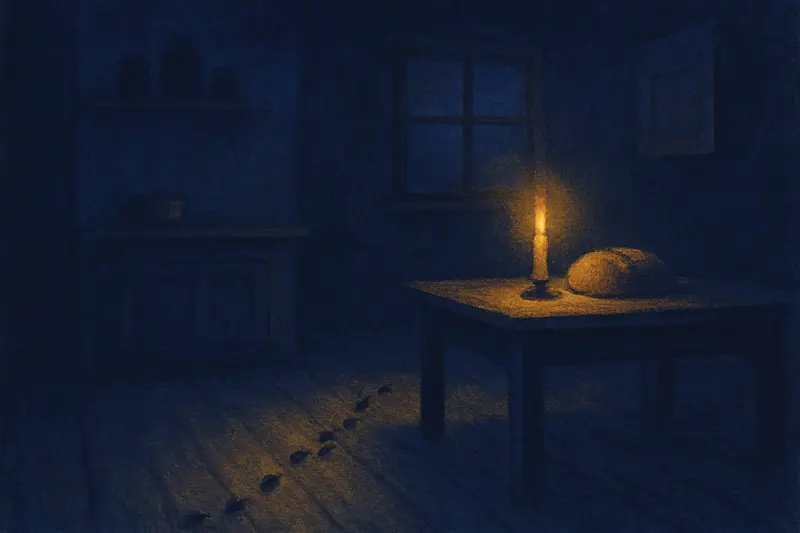
A trail across the kitchen floor, something in the bread, beetles behind the cupboard. The Golden Wheel Dream-Book (1862) read vermin of any kind as ill luck and enemies, especially when they were in the house or near the fireplace; out of doors, it said, they were unimportant. Miller's "Bugs" entry points the same way, to families suffering from carelessness. The modern reading follows the geography: the trouble is inside your private life, small but everywhere.
Was your dream different? Dreamlock reads the one you actually had →
What happened with the insects
What does it mean to dream of killing insects?
Swatting, stamping, spraying, and the relief when it's done. Here the old books brighten. Miller's 1901 dream dictionary read killing beetles as simply good, and killing mosquitoes as eventually overcoming obstacles and enjoying fortune and domestic bliss. The Golden Wheel Dream-Book (1862) called killing flies a very good omen, for love and trade alike. Psychologists hear the same relief: small, persistent problems finally being dealt with, one after another.
Was your dream different? Dreamlock reads the one you actually had →
What does it mean to dream of being bitten or stung by an insect?
A sharp sting on the hand, a bite that swells, a wasp caught in a sleeve. Miller's 1901 dream dictionary read bees themselves as pleasant and profitable engagements, but a bee's sting as "loss or injury" coming "from a friendly source". Under "Hornet" he read a sting to a young woman as envious women disparaging her. Psychologists often hear a small hurt from someone close: a remark that stung more than it should have.
What does it mean to dream of a swarm of insects?
The air thick with them, a cloud you can hear before you see. The Golden Wheel Dream-Book (1862) read a swarm of flies as a sign that the dreamer had many enemies, and that a sweetheart was not sincere. Psychologists read a swarm as overload: too many small demands arriving at once, none serious alone, all of them together too much.
Ants, flies and worms
What does it mean to dream of ants?
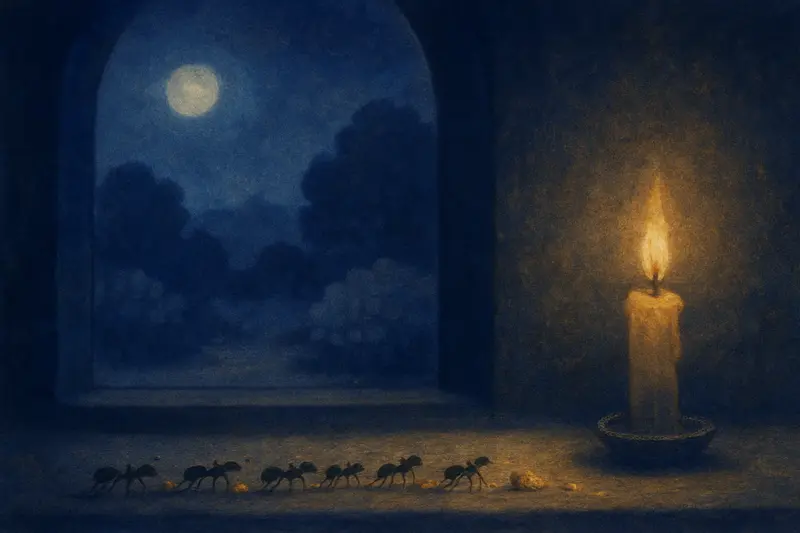
Ants in a line, ants on the table, ants where they shouldn't be. Miller's 1901 dream dictionary read them as "many petty annoyances during the day; chasing little worries, and finding general dissatisfaction in all things". The Golden Wheel Dream-Book (1862) simply called dreaming of ants unlucky. The modern reading is kinder to the ant: a picture of busy, small, relentless work, yours or someone else's, and the question of whether it is getting anywhere.
What does it mean to dream of flies?
Flies circling a plate, flies on the window, the buzz that won't stop. Miller's 1901 dream dictionary read flies as sickness and contagion, and as enemies surrounding the dreamer; for a young woman, killing them meant winning back her intended's love by her own ingenuity. That illness reading is a record of an old fear, not a forecast. The modern reading hears nagging: small irritations, gossip, a situation that keeps drawing attention to what's spoiling.
What does it mean to dream of worms?
Worms in the soil, in fruit, in food. Miller's 1901 dream dictionary read them as being oppressed by "the low intriguing of disreputable persons", though using them as fish bait meant turning one's enemies to good advantage. The Golden Wheel Dream-Book (1862) split worms in two: garden worms of the kind dug for fishing were health and good fortune, destructive worms were losses. The books disagree on the worm, and so does the modern reading: decay, or quiet work underground.
What does an insect dream mean psychologically?
Psychologists usually read insects through two things: number and nearness. One insect is a detail. Many insects are a mood: the sense of being overrun by small things (emails, chores, obligations, worries) that are each too minor to tackle and together impossible to ignore. The closer they come, on the table, in the bed, on the skin, the more personal the pressure.
The other thread is disgust. Insect dreams often carry a strong physical reaction, and disgust in dreams tends to mark something you want kept out of your life: a behaviour, a person, a thought. The dreams where you calmly brush the insects away or clear a room tend to come when that boundary is being restored. For eight legs rather than six, see dreams about spiders; for the old books' surprising view of lice, dreams about lice; for the cockroach, which the old books almost ignored, dreams about cockroaches.
A question to sit with
What small thing, repeated every day, has lately been taking up more room than it deserves?
A dream book can tell you that Miller thought ants were petty annoyances. It can't tell you why yours always appear in your grandmother's pantry, or only in weeks when work piles up. That shows only when your dreams are recorded and kept together. Dreamlock, on the App Store for iPhone, is a private dream journal made for exactly that: it listens to your dream, paints it, and notices when the same small creatures come back.