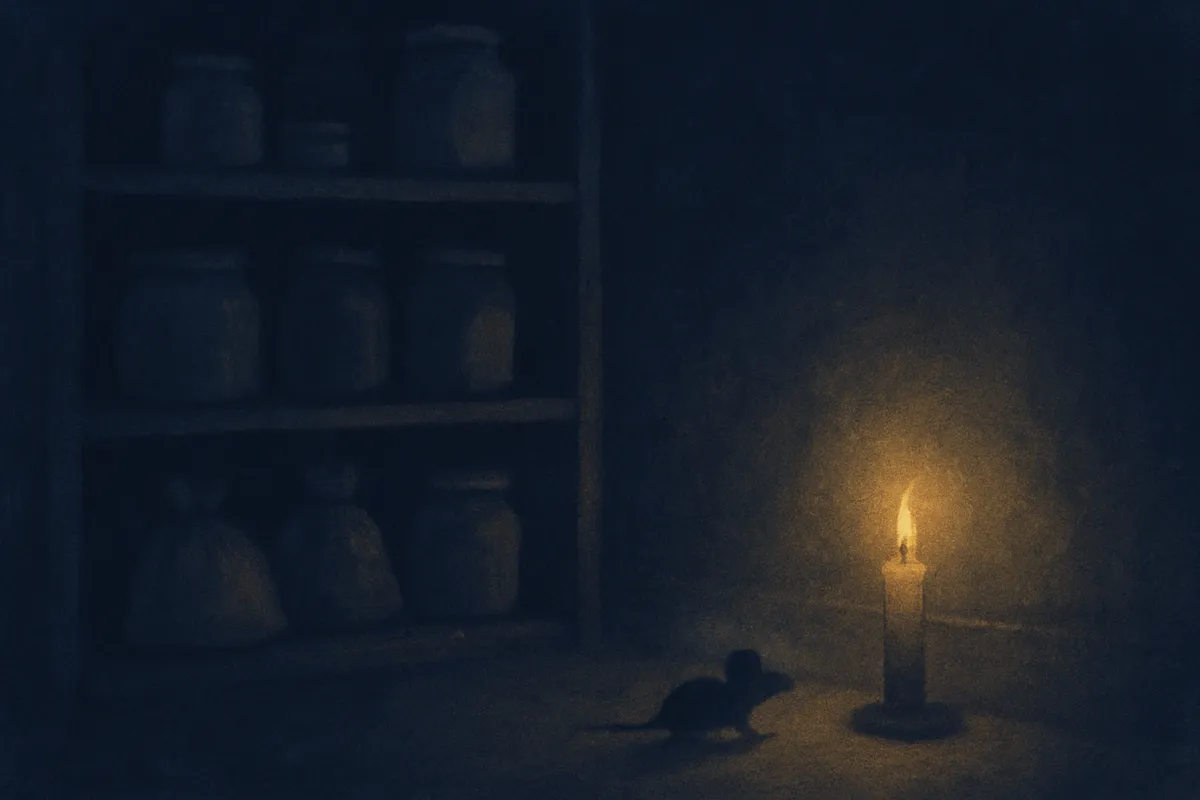
Rat dreams arrive with a shudder attached — most people wake from one feeling less frightened than contaminated. Yet across every tradition that kept a dream book, the rat has one steady meaning, and it is not monstrous at all. The rat is the hidden thief: the loss, the worry, the small spoiler working unseen — in the walls, behind the stores, just past the light.
What the traditions say
The European folk dream books read rats as losses accumulating unseen — stores gnawed, small sums leaking, a secret spoiler somewhere in the household. The entry sits close to their readings of money worried over and the house in disrepair: not catastrophe, but erosion. Those books also kept a detail from the old sailors' lore — rats leaving was read as a warning — while killing a rat meant a hidden trouble ended.
The Islamic tabir tradition sharpens the figure into a person: a corrupt pilferer within reach of the household, one who takes secretly and spoils quietly. Rats plentiful in the house read as disorder among its affairs; driving them out, the household set right.
The Polish sennik canon calls them worries with teeth — malicious gossip or losses accumulating in the dark — and gets practical: rats in the pantry meant check the household accounts. Where the snake of the dream books is an enemy you can at least see coiled in front of you, the rat is the one you only hear.
What psychologists notice
The modern reading keeps the walls and drops the superstition. Rat dreams tend to accompany something eating quietly at the dreamer — a shame, a debt, a doubt working in the walls. And psychologists reframe the ugliest part of the dream kindly: the disgust usually points at how you feel about the worry, not about yourself. You are not the rat. The rat is the thing you haven't looked at directly.
The same reading carries a practical edge: naming the gnawed thing by day tends to quiet the walls at night.
A question to sit with
What in your waking life is being quietly eaten — a sum, a confidence, a store of patience — that you rarely check on, because checking would make it real?
If rats were in the house or pantry
The dream books read the house as the dreamer's own life, so rats indoors pointed everything inward. The sennik canon's advice is almost bookkeeping: rats in the pantry — check the household accounts. The tabir tradition read rats plentiful in the house as disorder among its affairs, something inside the circle taking quietly. The modern ear hears the same geography: the worry isn't out in the world somewhere, it's living where you live.
If you drove them out
Every tradition brightens here. The folk books read killing a rat as a hidden trouble ended; the tabir tradition read driving rats out as the household set right; the sennik canon reads chasing them out as order restored by decision — that last word doing the work. The books did distinguish this from rats simply leaving on their own, which the sailors' lore treated as a warning: resolution you chose read differently from quiet that merely arrived.
If there was just one
The sennik canon has the finest line in any rat entry: "a single bold rat — one worry that has stopped hiding." A rat that walks out into the middle of the floor and looks at you is no longer working in the walls, and psychologists would call that strangely good news — the gnawing thing has surfaced where it can finally be named. The dream has done half the naming for you; the other half happens awake.
A dictionary can tell you what rats mean in general. It can't tell you that yours appears in your childhood kitchen, or only in the weeks when a certain bill goes unopened — the pattern is the message, and patterns take more than one remembered dream, which is where keeping hold of them starts. That's what Dreamlock is being built for: it listens to your dream while you're still half-asleep, remembers it, and over time shows you what your rat runs alongside. Coming soon to the App Store.