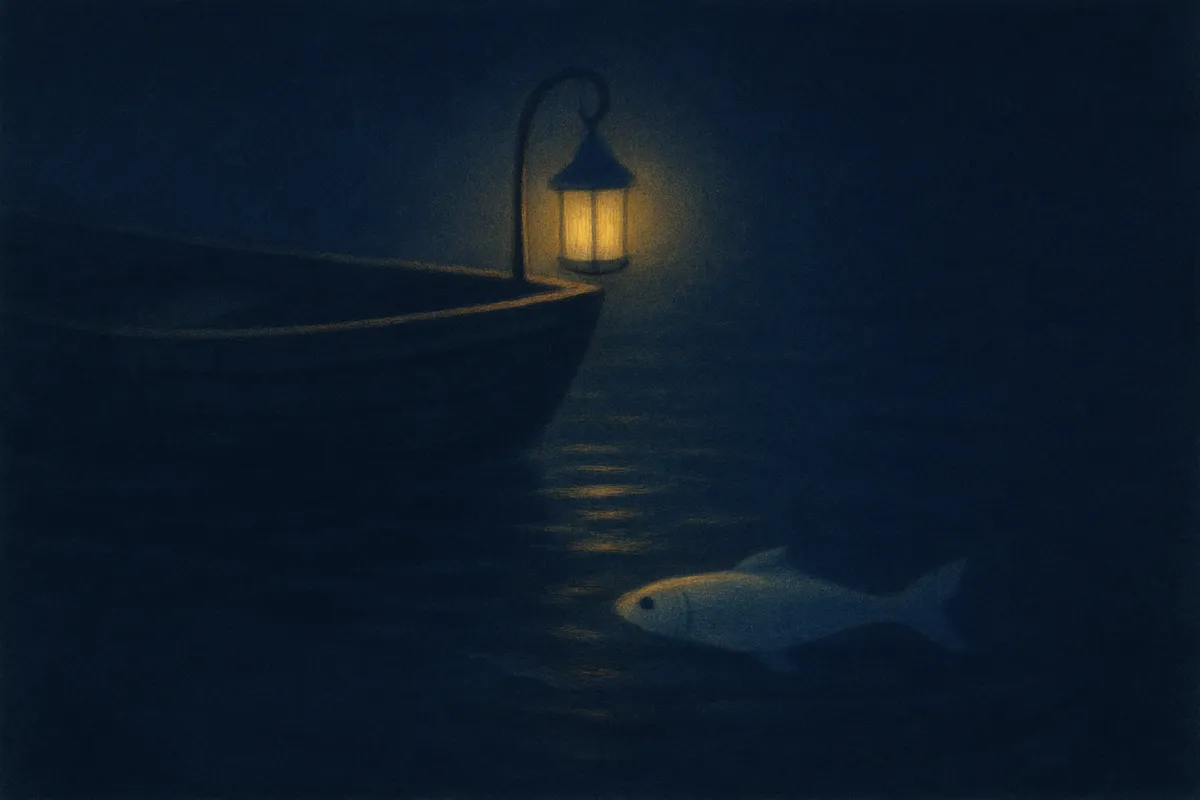
Fish dreams are quiet ones, mostly — no chase, no falling, just something gleaming under the surface. And yet the old dream books gave the fish some of their warmest, most carefully graded entries, because for most of history a fish was the plainest picture of livelihood there was: food and fortune pulled out of deep water by patience and luck.
What the traditions say
The Islamic tabir tradition holds one of its most generous entries here. Fish read as provision and wealth drawn from the sea of the world — and the tradition loved this symbol enough to grade it finely: a fresh fish, lawful gain; a large fish, substantial provision; many fish, plenty. Only spoilage turned the reading — a spoiled fish meant gain that will not keep.
The Polish sennik canon compresses the whole question into three words, and the entry is famous for it: "fish — profit, or tears." The old senniks give both and let the dream's mood decide. That terseness is the point — the sennik is admitting that the same silver shape can be a living or a loss, and only the dreamer's dream knows which. Its variants pick a side: catching fish, success drawn up by patience; a slippery fish escaping, a chance mishandled; cleaning fish, fortune turned into something usable.
The European folk books sit closer to the tabir's optimism: abundance from deep water, gains drawn up by effort. But they added one instruction worth keeping — read the water alongside the catch. Clear water carried the kind reading; murky or troubled water shaded it.
What psychologists notice
Psychologists reach for the same picture the traditions did, aimed inward: contents surfacing from deep water. A fish is the classic image for material rising from below awareness — an idea, a feeling, a memory that is almost catchable. Catching the fish tracks with an insight landed; the one that slips away is the thought that got away in the shallows of waking. And schools of fish tend to swim through dreams in seasons of real or hoped-for plenty — the mind rehearsing abundance it senses or wants.
A question to sit with
What in your life right now is circling just under the surface — almost visible, almost yours — and what would it take to bring it up?
If you caught the fish
The best version of the dream in every book on the shelf. The folk tradition read the catch as gains drawn up by effort; the sennik, success drawn up by patience; the tabir tradition, provision made yours — the larger the fish, the more substantial the reading, the way it graded gold and money by weight. The modern reading keeps the shape and drops the ledger: something you'd been working toward finally in hand. Worth noting is how you caught it — line, net, or bare hands says something about how the real thing came to you.
If it slipped away
The traditions are unusually unanimous here. The folk books: an opportunity missed. The sennik: a chance mishandled. Psychologists: the thought that got away. If a fish escaped your grip in the dream, the honest question isn't what it predicts — it's what nearly-had thing from the last few weeks your sleeping mind is still turning over. Dreams replay the slip; they don't schedule the next one.
If there were many
Plenty, in every register. The tabir entry says it plainly — many fish, plenty — and the folk books agree. Psychologists notice that schools of fish tend to accompany seasons of real or hoped abundance: a good stretch arriving, or wanted badly enough to swim through your sleep. If the many fish felt overwhelming rather than rich, that's worth keeping in the retelling — plenty can also be more than you know how to haul in.
If the fish was dead or spoiled
The turn every tradition takes. The tabir books, so generous elsewhere in this entry, read spoiled fish as gain that will not keep — a precise and slightly chilling phrase. The folk books read dead fish as disappointment, full stop. The sennik's tears live mostly here. In modern terms: something that promised nourishment — a deal, a plan, a connection — has gone off, and part of you has already smelled it.
A dictionary can tell you what fish have meant to dreamers for a thousand years. It can't tell you why yours surface every time money gets tight, or what was in the water with them. That pattern only shows up when your dreams are remembered and kept together — which is exactly what Dreamlock, coming soon, is built for: it listens to your dream while you're still half-asleep, paints it, and remembers where the fish have been.