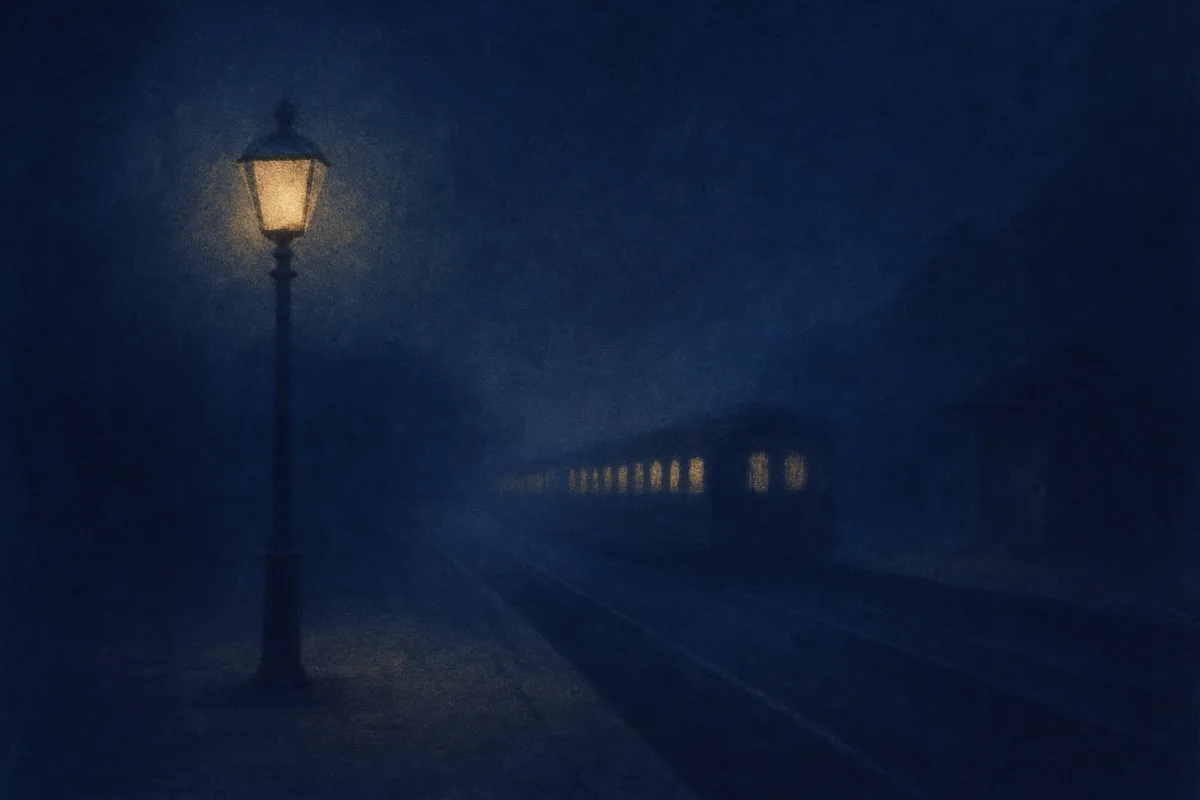
You know the feeling before you're fully awake: the platform, the clock, the doors closing three steps ahead of you. Being late is one of the most common dreams adults report, and it almost never arrives during a calm week. The old dream books had an entry for it centuries before anyone owned a watch.
What the traditions say
The European folk books' nearest entry is the missed coach or ship: an opportunity feared lost, a door closing while the dreamer is still on the road. Arriving too late they read as a warning to attend to a matter now; the vehicle leaving without you, a course of events departing from your control.
The tabir tradition reads the same scene as the caravan leaving — a worldly chance departing — and arriving after the appointed hour as a duty owed and felt. Its counsel is strikingly practical: attend to the pressing matter rather than mourning the missed one.
The Polish sennik canon files being late under haste — an opportunity at risk, or a warning against overcommitment — and keeps the sharpest line of all for one variant: running and not arriving — effort spent where a decision was needed instead.
Notice what all three agree on: none of them reads lateness as a loss already suffered. It's always a door still closing, never a door closed.
What psychologists notice
Psychologists call this the overload dream. Being late tracks time-pressure and the fear of missing one's own life — the trains and planes departing read as stages, chances, and roles the dreamer fears are leaving without them. The promotion, the family, the version of yourself you meant to be by now: the dream puts them on a timetable and shows you the platform.
It clusters in seasons of overcommitment, which points to the reframe worth keeping. The useful waking question is usually not "what am I late for?" but "what am I carrying too much of?" The dream stages a race; the life behind it is usually staging a triage. That's also why being late sits near dreams of being chased and falling in the common-dream lists — all three are pressure finding a shape.
A question to sit with
If the train in your dream really did leave — which departure, in your waking life, would that be? And is it truly leaving, or just moving?
If the train, plane, or bus left without you
The folk books' core reading: a course of events departing from your control. The modern ear adds a distinction the dream itself blurs — a vehicle that leaves runs on someone else's schedule, and part of the dream's sting is discovering which timetables were never yours to set. Worth noticing: in most of these dreams the dreamer is weighed down — luggage, coats, someone else's bags. What you were carrying on the platform is often the most honest detail in the dream.
If you were running and never arriving
The sennik canon's line is hard to improve on: effort spent where a decision was needed instead. Running dreams that never resolve tend to show up when waking life is all motion and no choosing — three options kept open, none taken. Unlike being chased, nothing pursues you here; the pressure is entirely in front of you, which is its own piece of information.
If you were late for something that mattered (a wedding, an exam)
Raising the stakes narrows the meaning. Late for a wedding, the dream is usually about a bond or a promise you fear failing; late for an exam, about being judged unready — a close cousin of the classic naked-in-public dream, where the fear is exposure rather than absence. In both, the tell is who was waiting for you. The dream rarely cares about the ceremony; it cares about the face at the front of the room.
A dictionary can tell you what being late means in general. It can't see that your train dreams arrive every March, or that you're always carrying your mother's suitcase when the doors close. That's the part only your own dreams, remembered together, can answer — Dreamlock, coming soon, is built to keep them and notice exactly that. Until then, the habit that costs nothing: learn to remember them.