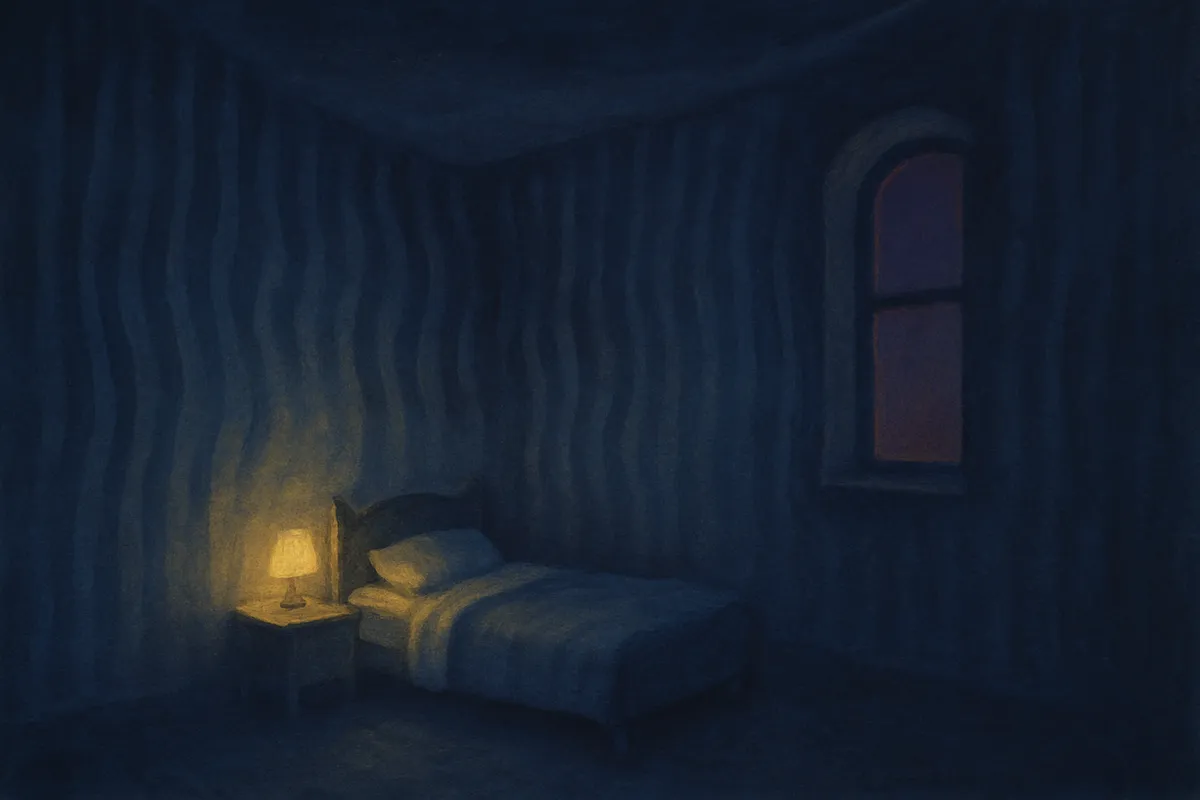
A fever dream is exactly what the name says: a dream that happens while your body is running a high temperature. But the name has earned its second life as slang for a reason — fever dreams really are different from ordinary dreams, and almost everyone who has had one remembers it.
The phrase now lives a double life. If you came here after someone described a movie, a meeting, or the year in general as "a total fever dream," we'll get to that sense too. First, the real thing.
What fever dreams are like
Ask people to describe dreams they had while feverish and the same words come back: intense, bizarre, unpleasant. Reports of fever dreams are consistently darker and stranger than reports of ordinary dreams — and strange in particular ways.
Space misbehaves. Walls lean, rooms stretch, distances refuse to stay measured. Tasks loop: the dreamer sorts something endless, repeats an action that never completes, is sent back to the beginning again and again. The dreams tend to be oddly underpopulated — fewer people than usual, and the ones who appear may be distorted. And the fever itself leaks into the imagery: heat, fire, melting, suffocation, things too bright or too close. It's as if the dream is trying to narrate the state of the body it's running on — which may be close to the truth.
Why a hot body dreams strangely
Two ordinary facts combine here.
Fever breaks sleep apart. A body running hot sleeps badly — shallowly, with frequent waking. Sleep regulates temperature poorly during REM, the stage where vivid dreaming lives, so a feverish night distorts exactly the sleep that dreams are made in. And because you keep surfacing, you keep waking directly out of dreams — which is the single best way to remember one. Part of the fever dream's reputation is simply that, for once, you caught it.
A hot brain dreams differently. The brain is sensitive to its own temperature, and running it above range seems to change the character of what it produces at night — sleep researchers describe fever dreams as more negative and more distorted than ordinary dreaming, less anchored, less social. The machinery still runs; it just runs strange, the way a warped record still plays.
One calm note, and only one: the dreams are harmless, but the fever is the actual event — a high or lasting fever is a matter for a doctor, not a dream journal.
"That was a fever dream": the slang
The idiom borrows all of the above. Calling something a fever dream — a film, a party, a stretch of news — means it was surreal, disjointed, and hard to believe in the retelling: did that actually happen? The phrase carries the texture of the real experience (vivid, illogical, slightly too much) without the illness, and usually lands with amusement or disbelief rather than distress. English kept the phrase because the experience is so recognizable that it became a unit of measurement for strangeness.
Is a fever dream worth interpreting?
Held next to ordinary dreams, probably lightly. A fever dream says more about your temperature than your inner life; the distortion is the illness talking. This isn't the dream where you'd linger over why you were being chased — the chase was likely just the heat.
And yet the fever only bends what was already there. The rooms are your rooms; the endless task is often suspiciously like your actual to-do list. People recovering from an illness are often struck by what, of all things, their mind chose to warp — which is a gentler version of the question all dreaming raises: why do we dream at all?
If a fever dream is vivid enough to stay with you, treat it like any striking dream: get it down before it fades. That's the whole idea behind Dreamlock, coming soon — mumble the dream into your phone while it's still warm, so to speak, and find it retold, painted, and gently interpreted by morning. Even the strange ones. Especially the strange ones.